Paris Fashion Week street style is the best-dressed spectator sport in fashion. Twice a year, the pavements outside the Grand Palais and the Tuileries become a runway of their own — editors, models, and insiders in looks that are somehow both studied and effortless. The good news: unlike actual runway pieces, street style is meant to be decoded and copied. Below are 15 Paris Fashion Week looks broken down piece by piece, with exactly how to wear each one in real life.
1. The Oversized Blazer + Bare Legs Formula
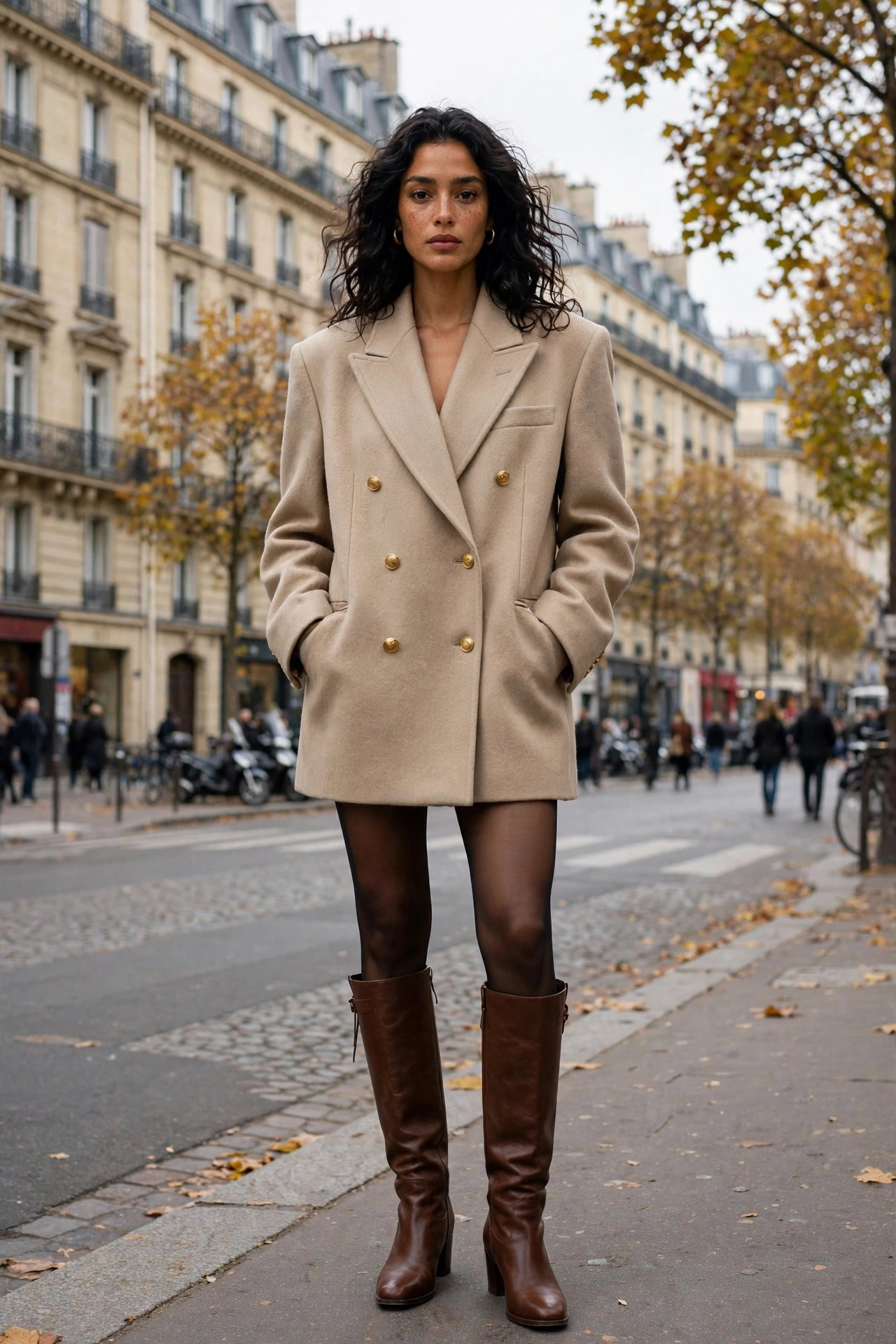
The single most photographed silhouette at PFW is the oversized double-breasted blazer worn as a dress — strong padded shoulders, peak lapels, sleeves pushed up to the forearm, skimming mid-thigh over sheer black tights or bare legs, finished with knee-high boots. It’s the Saint Laurent codes distilled: masculine tailoring made deliberately feminine by what it leaves out. The blazer always looks best in wool with a bit of structure; soft, drapey blazers collapse into bathrobe territory.
In real life, thrift a men’s wool blazer one to two sizes up and get the sleeves shortened if they swallow your hands. Wear it buttoned with the middle button only, add a slim belt if you want waist definition, and keep everything else minimal — the blazer is the outfit. Sheer 20-denier tights make it office-adjacent; bare legs with loafers make it weekend.
2. The Belted Trench Over a Slip Dress
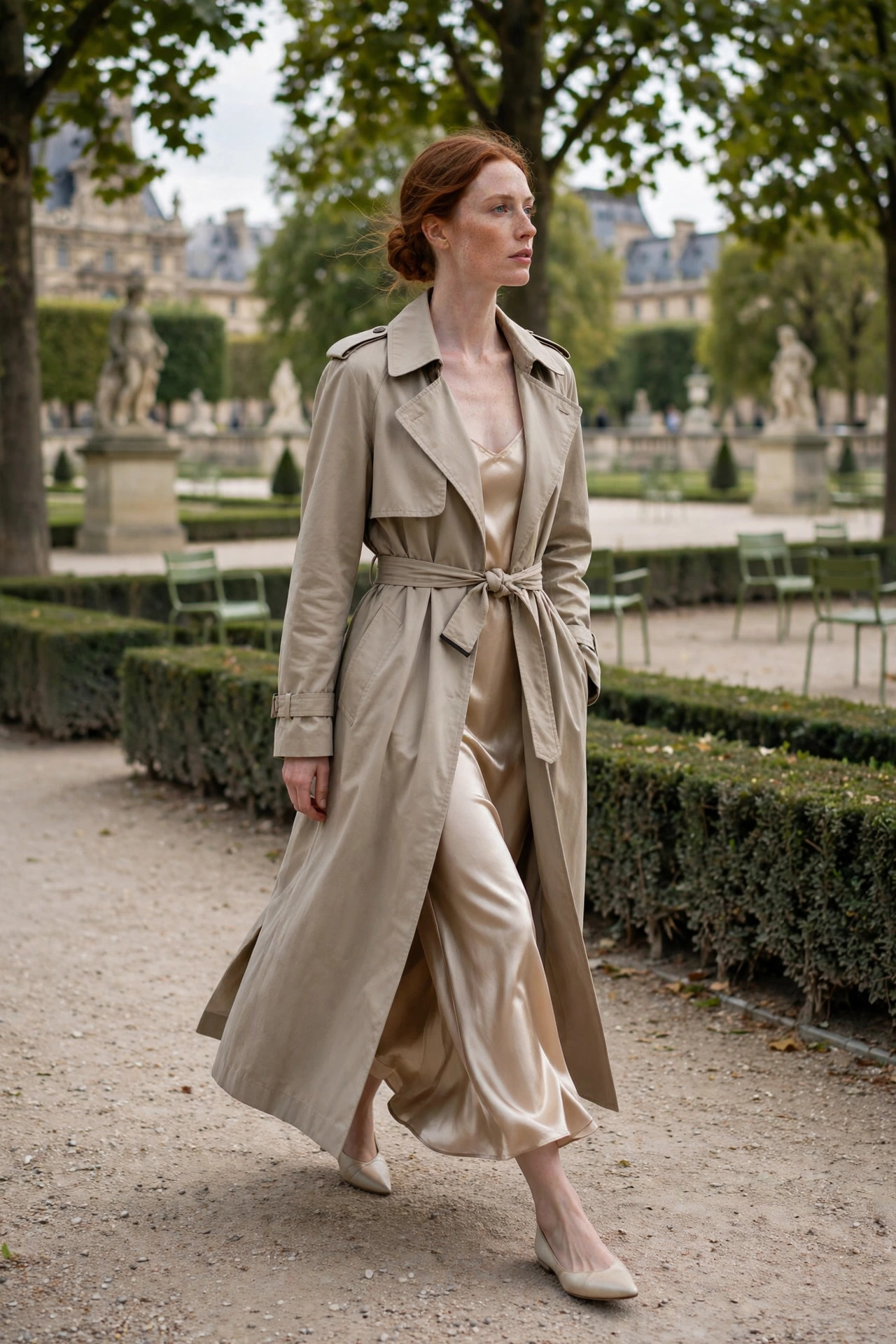
Nothing says PFW like a long trench coat cinched hard at the waist over a champagne satin slip dress. The trench does the heavy lifting — storm flap, epaulettes, horn-effect buttons, hitting mid-calf — while the slip dress underneath adds a whisper of evening. The key detail insiders get right: the belt is pulled tight enough to blouse the trench slightly above and below, creating that sculpted hourglass the straight-cut coat lacks on its own.
You don’t need a new trench. Belt any trench you already own with its own belt or a wide leather one, and let a satin slip dress or skirt peek out below the hem. For more ways to wear the slippery staple underneath, our satin skirt outfits roundup has a full guide. Keep footwear simple — pointed flats or strappy heels — because the coat-plus-slip is already doing plenty.
3. Wide-Leg Tailoring + Cropped Knit
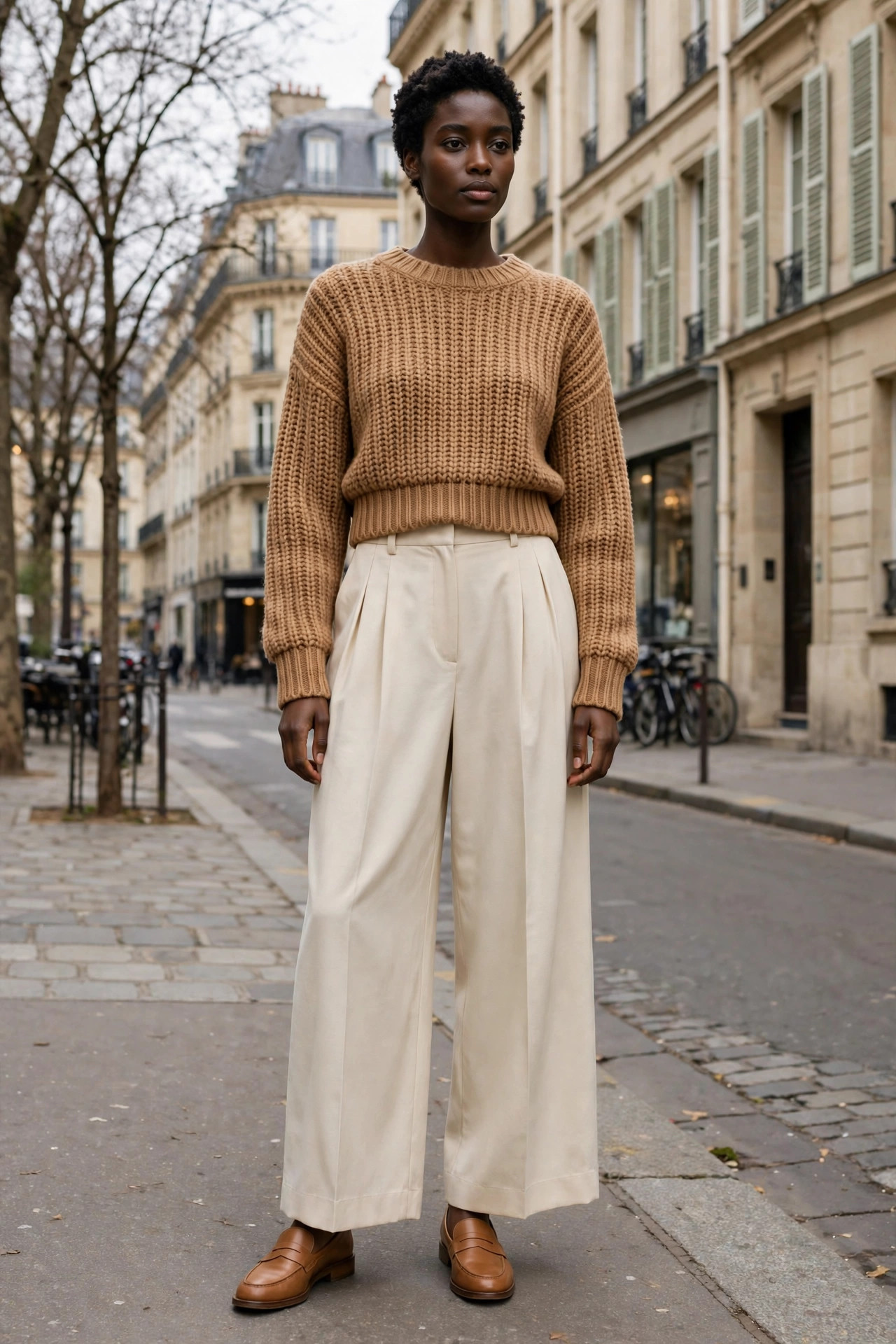
The proportion trick PFW editors rely on most: ultra-high-waisted, pleated wide-leg trousers paired with a cropped chunky knit that ends exactly at the waistband. The trousers elongate the leg to improbable lengths while the cropped knit keeps the volume balanced — all the width sits below the waist, none above it. Look for trousers with a proper waistband and front pleats rather than elastic backs; the structure is what makes them read expensive.
To copy it, the rise matters more than the brand: the trouser waistband should sit at your natural waist, and the knit should be cropped enough to show a sliver of waistband but not skin. A ribbed or cable knit in cream or camel keeps it Parisian; loafers or low block heels finish it. This is one of the easiest PFW formulas to wear to an actual office.
4. The Statement Coat as the Whole Outfit
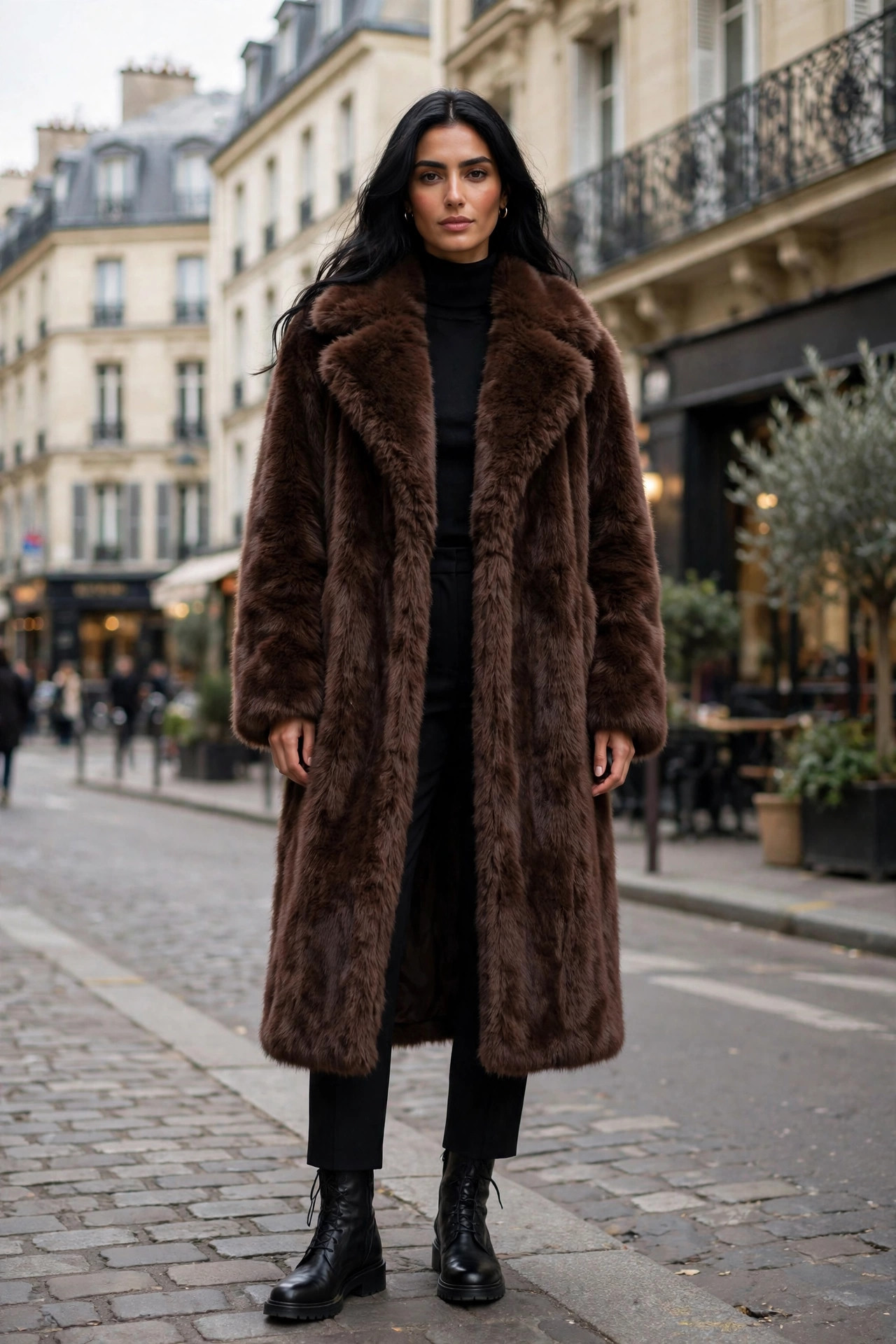
At PFW, the coat is never just outerwear — it’s the outfit. The version on repeat right now is a chocolate-brown faux-fur or shearling coat worn over a deliberately plain all-black base: black turtleneck, black straight-leg trousers, black boots. The coat gets 100% of the attention because everything underneath refuses to compete. Brown fur reads warmer and more modern than black, and the all-black base keeps it from tipping into 1970s costume.
The real-life rule is simple: invest in one genuinely great coat and keep the base uniform boring. A knee-length or longer cut looks more expensive than cropped, and a notched lapel or clean collar beats fussy details. When the coat comes off indoors, the black base still looks intentional — which is the whole point of the strategy.
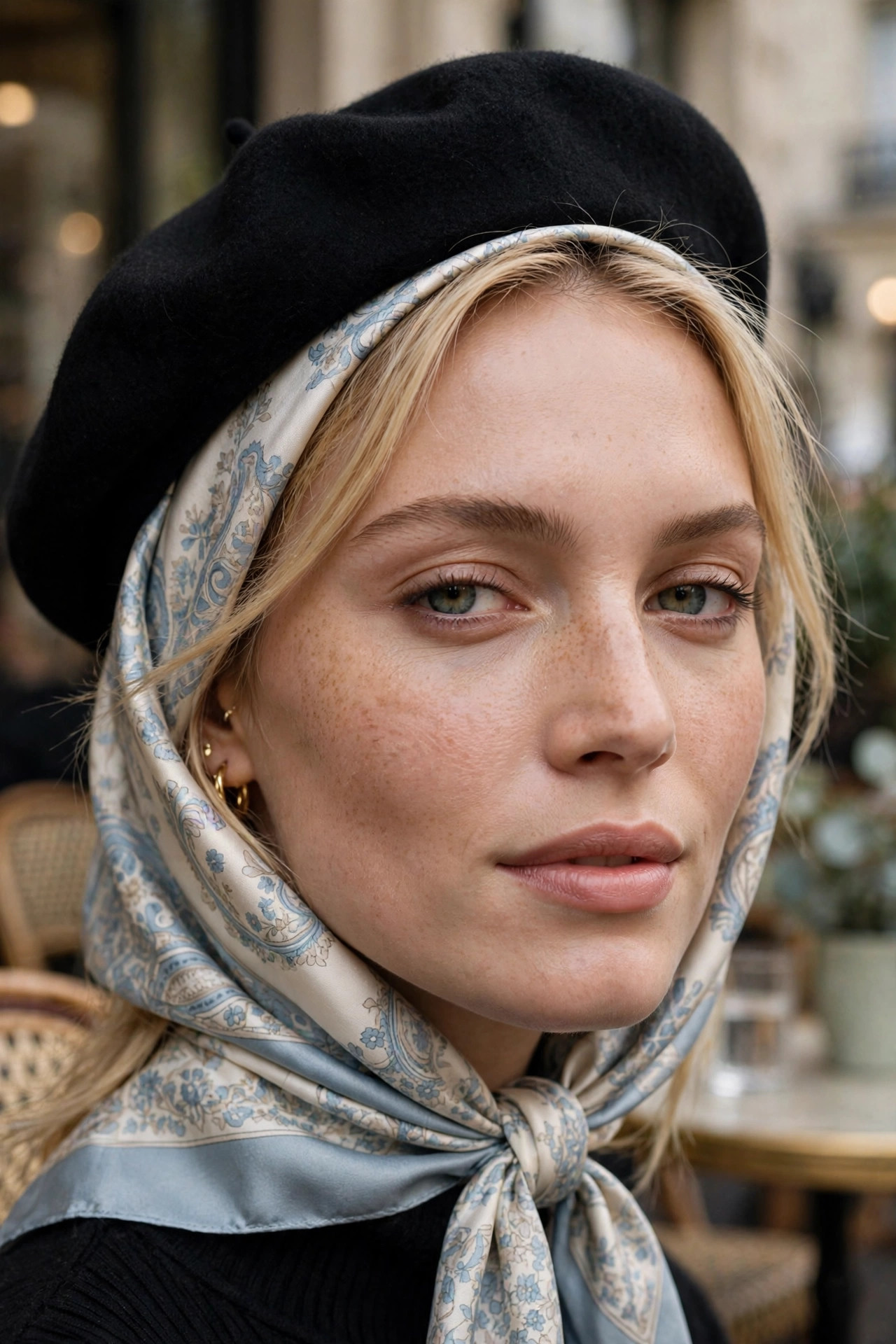
5. The Silk Scarf, Three Ways
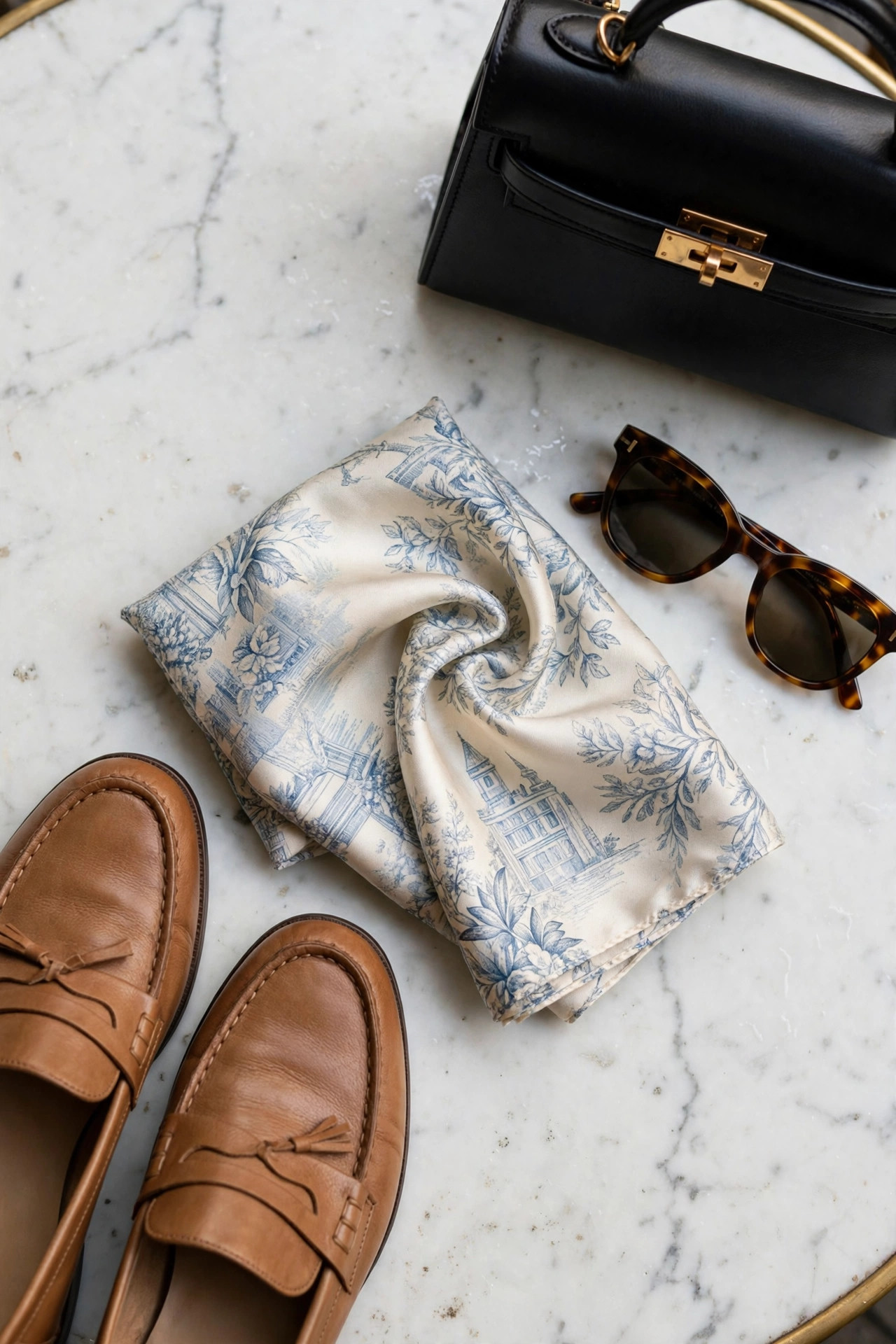
The silk carré is the hardest-working accessory at PFW, and insiders wear it three ways: folded into a headscarf under a beret or cap, knotted as a top over a plain camisole, or tied to a bag handle for color. The headscarf version — triangle fold, knotted under the chin or at the nape — is the most photographed; worn as a top, the bias-fold drape across the torso with the ends tied at the back is the one that actually stays put.
To try it, start with the bag-handle tie (zero risk, instant polish), then attempt the headscarf with a 90cm square in a small-scale print — large prints overwhelm the face. As a top, layer it over a nude camisole for security and pair with high-waisted trousers so only a sliver of midriff shows. One silk scarf, three outfits: that’s cost-per-wear math Parisians understand instinctively.
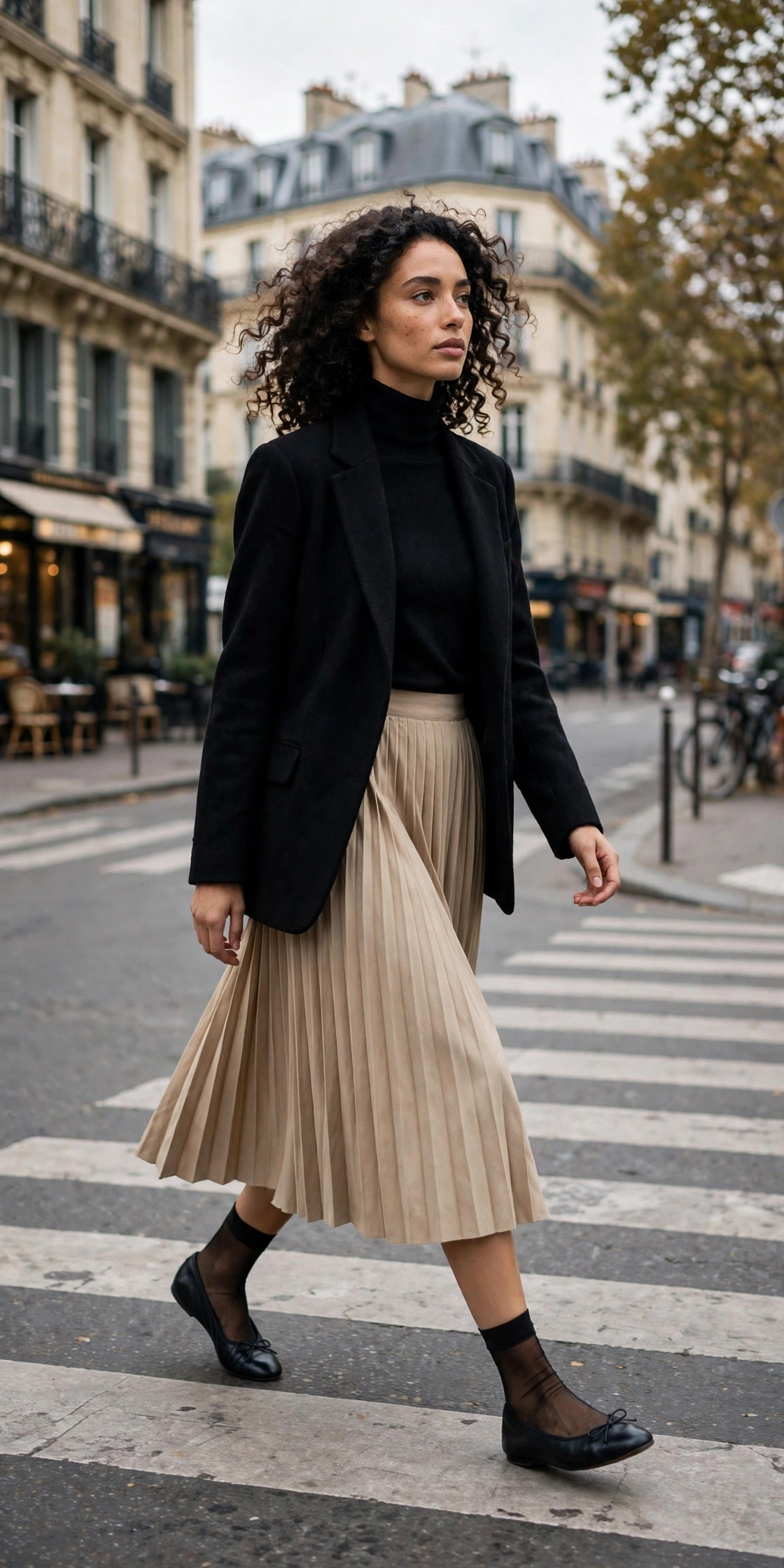
6. Ballet Flats + Ankle Socks + Midi
The Miu Miu-ified uniform that took over PFW sidewalks: a pleated or A-line midi skirt, sheer or ribbed ankle socks, and leather ballet flats. It shouldn’t work — socks with skirts was a school-uniform rule-break — but the deliberate styling line at the ankle makes it look considered rather than accidental. The skirt usually hits mid-calf, the socks peek two inches above the flat, and the whole thing reads gamine rather than girlish because the pieces are grown-up: wool pleats, real leather.
Copy it with any midi skirt you own and a pair of sheer black or ribbed cream ankle socks. The flat should have a low vamp (more foot showing = longer leg line) and the sock should be thin enough to look intentional, not sporty. Skip it with mini skirts — the proportion only works when there’s a long stretch of skirt above the ankle.
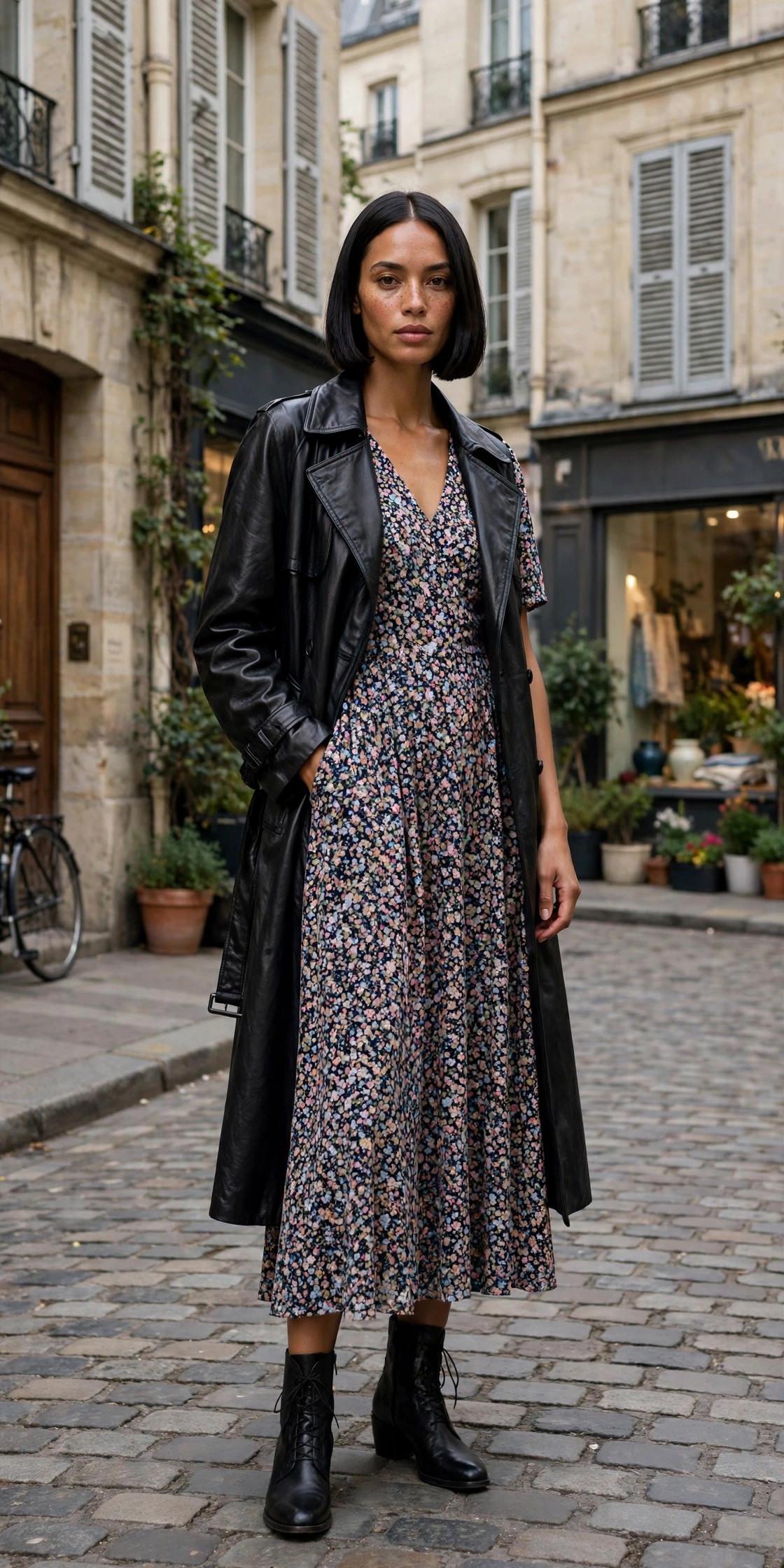
7. Leather Trench Over Something Soft
The toughest-looking outfit at PFW is secretly the softest: a black leather (or vegan leather) trench worn open over a floral midi dress or satin slip. The contrast is the entire point — hard, structured leather against something fluid and feminine. The trench should hit mid-calf and be worn open or belted loosely; buttoned-up tight, it reads Matrix rather than Marais.
In real life, this is the easiest way to make a dress you already own feel new. The dress underneath can be as pretty as you like — florals, lace, pastels all work — because the leather does the edging for you. Keep the boots simple (ankle or knee, no extra hardware) so the two textures stay the whole story.
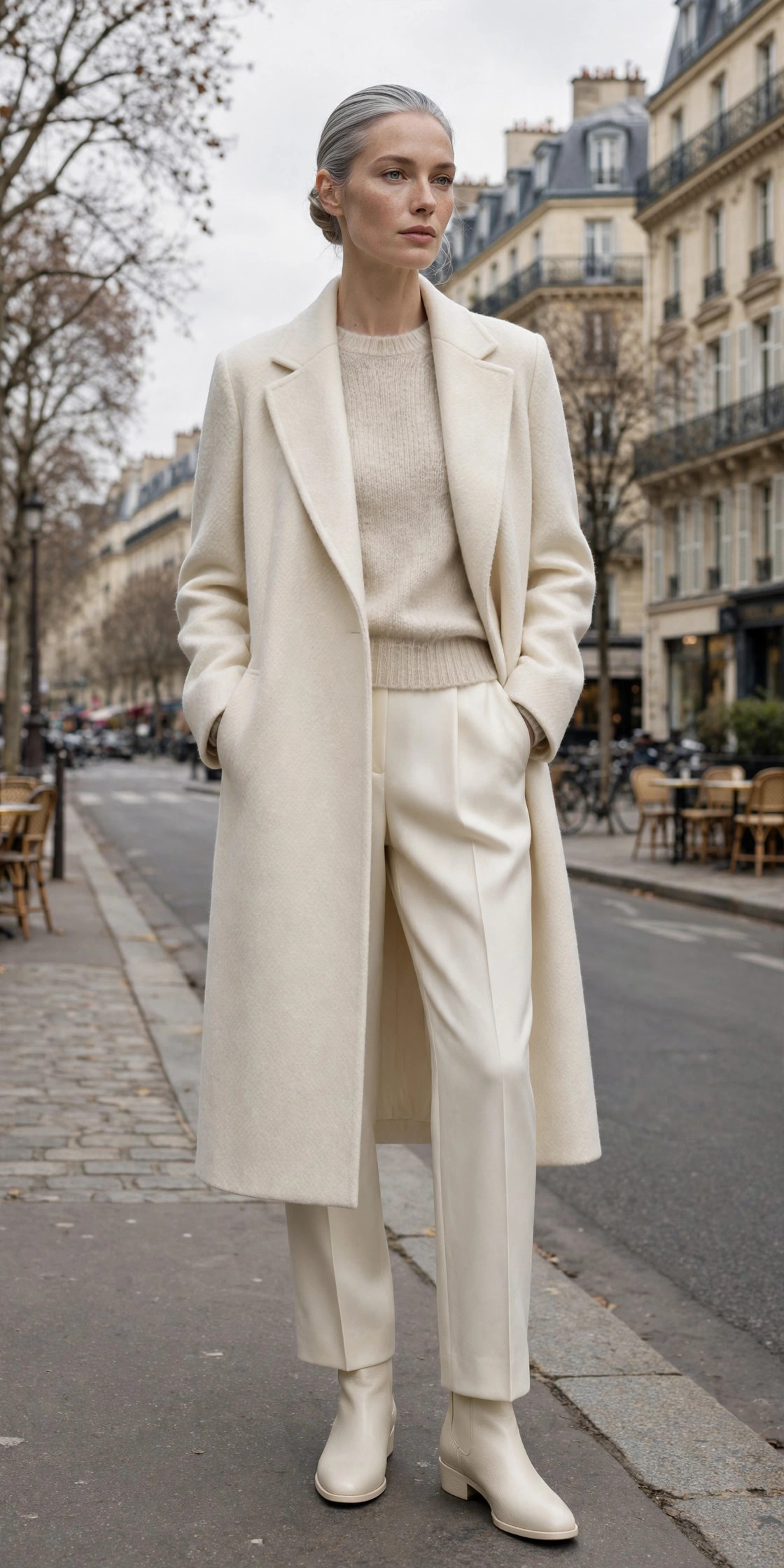
8. Head-to-Toe Ivory
PFW’s quietest flex is also its hardest to pull off: ivory from head to toe. The insiders who nail it never wear one flat shade — they layer three or more tones (optic white, ivory, oatmeal, ecru) across three or more textures (wool coat, cashmere knit, silk trousers, leather boots). The tonal variation is what stops it looking like a uniform and starts it looking expensive. A long ivory coat over the whole thing is the signature move.
Start with what you own in cream and white, and add one deeper oatmeal piece so the layers read as deliberate. Winter fabrics — wool, cashmere, shearling — make it seasonal rather than bridal. For a full masterclass in tonal dressing, our cream white winter outfits guide breaks down the exact formulas.
9. The Modern Breton Uniform
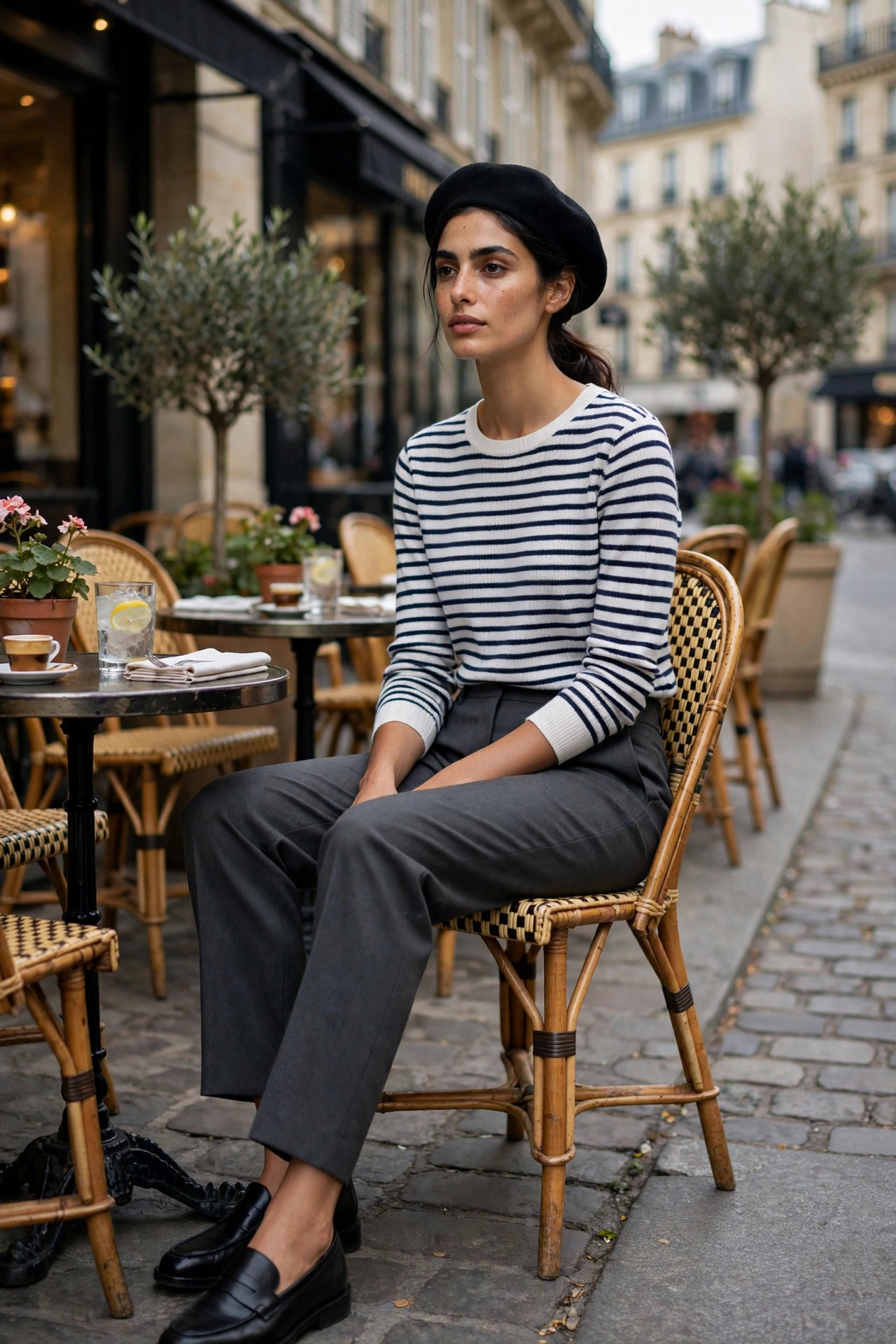
The Breton stripe never left Paris, but the PFW version has rules: fine stripes (not chunky rugby width), a fitted knit (not slouchy), and sharp tailored trousers in charcoal or navy — never jeans. Add a beret worn tilted back off the forehead and leather loafers, and you have the modern Parisian uniform. The trick is restraint: one French cliché per outfit. Stripes plus beret plus red lip is a costume; stripes plus beret plus minimal makeup is a look.
Keep the knit fine-gauge so it tucks cleanly into high-waisted trousers, and let the beret sit back rather than pulled low. This is the PFW look with the lowest buy-in — most closets already contain two of the three pieces.
10. Slip Skirt + Chunky Knit
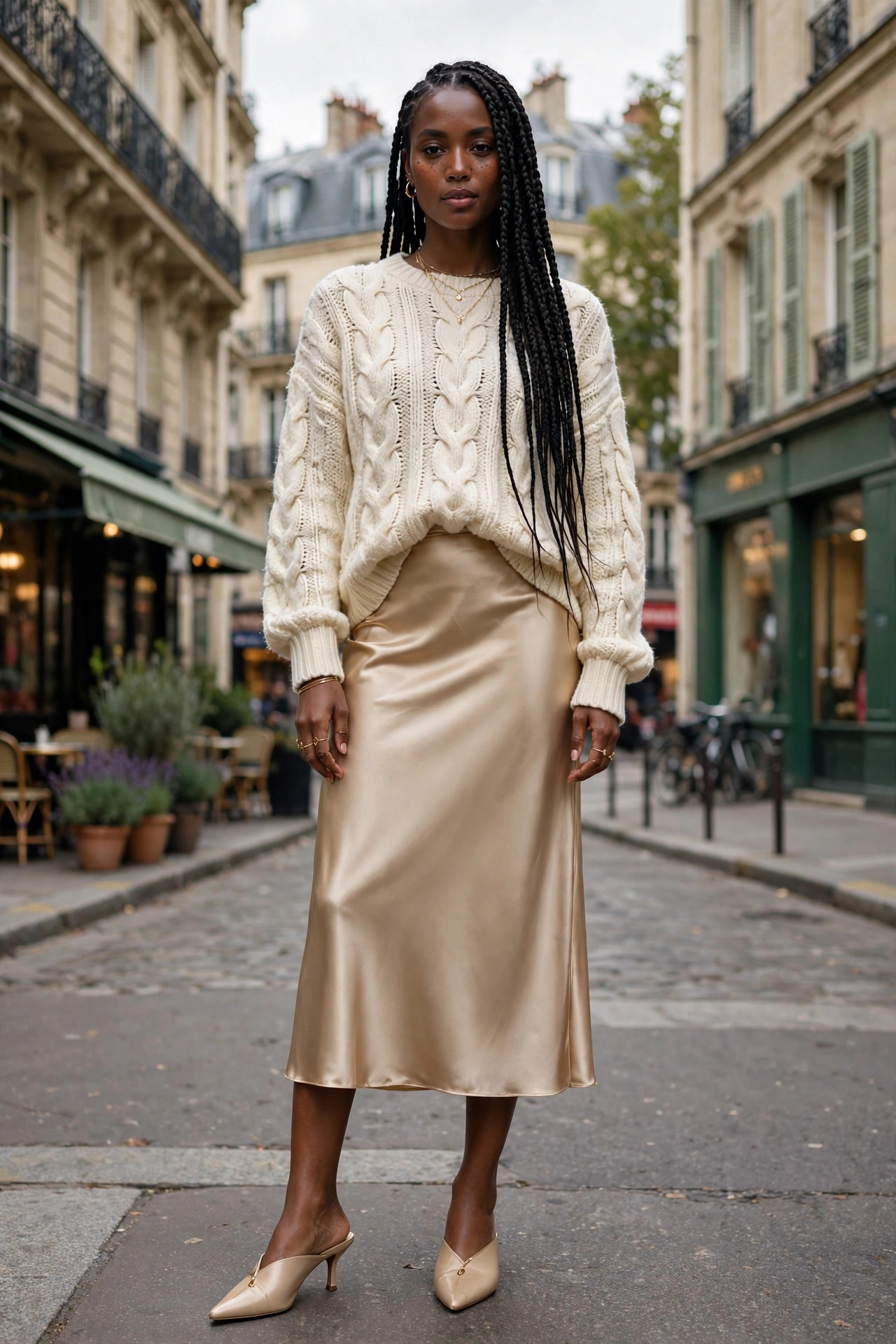
The texture-contrast formula PFW runs on repeat: a champagne satin midi slip skirt paired with an oversized cream cable-knit sweater, front-tucked just enough to show the waistband. Liquid satin against chunky wool is the kind of high-low mix that photographs beautifully and feels effortless — the skirt brings the polish, the knit brings the ease. Heels dress it up, sneakers dress it down; the formula survives both.
The tuck is the make-or-break detail: a full tuck looks prim, no tuck looks sloppy — the French tuck (front few inches only) is the sweet spot. If you want more knit-and-slip combinations, our striped cardigan outfit ideas play the same texture game. Finish with delicate gold jewelry; anything chunky fights the satin.
11. The Waistcoat as a Top
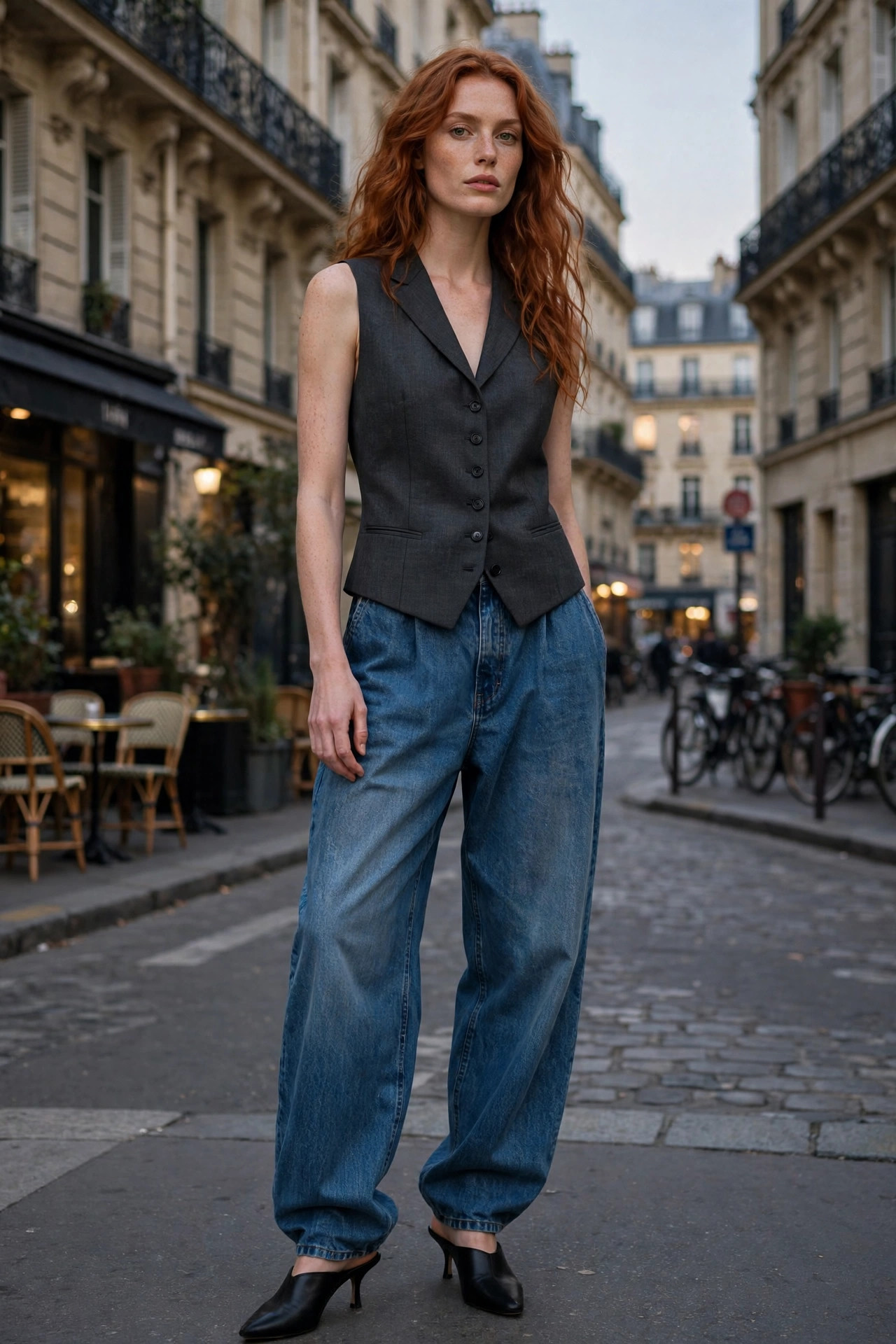
Suiting worn as eveningwear is a PFW staple: a tailored waistcoat buttoned up and worn solo as a top, paired with baggy blue jeans and heeled mules or slingbacks. The waistcoat’s nipped waist and V-neckline do the same work as a going-out top, but the suiting fabric makes it look deliberate and expensive. Back vents and a proper lining are the details that separate a real waistcoat from a costume one.
Any suit vest works — thrift stores are full of them — but it must fit closely through the waist with no gaping at the buttons. Wear it with relaxed denim (never skinny; the volume contrast is the point) and keep jewelry minimal. It’s also the hardest-working piece in a small wardrobe, which is why it anchors our fall capsule wardrobe guide too.

12. Opera Gloves with Sleeveless
PFW after-dark dressing has a signature move: long leather opera gloves — to the elbow or beyond — worn with a sleeveless black dress or vest top. The gloves add instant drama and a vintage couture reference, and they solve the bare-arms-in-winter problem elegantly. Nappa leather in black is the classic; burgundy or forest green is the insider flex.
The dress underneath should be simple — a clean sheath or slip — because the gloves are the statement. Keep the neckline modest to balance the arm exposure, and skip bracelets entirely (they bunch over leather). This is evening-only territory; gloves with daytime tailoring reads costume.

13. Pleated Midi + Turtleneck
The workhorse of PFW street style: a pleated midi skirt in burgundy, forest, or metallic gold with a fitted black turtleneck tucked in fully. It’s the formula that works for shows, dinners, and everything between — polished without trying, warm without bulk. The pleats catch light and movement in a way flat skirts don’t, which is why photographers love it.
Fit notes that matter: the turtleneck must be fitted enough to tuck without bunching, and the skirt’s waistband should sit at the natural waist. Add knee-high boots and the leg line stays unbroken; add ankle boots and you get a deliberate break that works just as well. A slim belt over the tuck is optional but adds polish.

14. The Wrong-Shoe Theory
The styling theory PFW stylists swear by: take a polished outfit and finish it with one deliberately “wrong” shoe. The classic execution is an oversized grey suit — double-breasted, pleated trousers — with clean white sneakers instead of heels. The sneakers undercut the formality just enough to make the whole thing look intentional rather than overdressed, and it’s the reason the look gets photographed.
The theory only works if the “wrong” shoe is pristine — scuffed sneakers read as an accident, spotless ones read as a choice. Apply it anywhere: evening dress with ballet flats, slip skirt with chunky loafers, tailoring with sneakers. One wrong element per outfit; two wrongs make a mess.
Frequently Asked Questions
What do people actually wear to Paris Fashion Week?
It depends on who they are. Editors and buyers wear the formulas above — tailored, considered, comfortable enough for a full day of shows. Models off-duty skew casual: vintage denim, oversized blazers, sneakers. Influencers dress for the photographers outside the venues, which is where the most extreme looks come from. The common thread is intention: nothing at PFW looks accidental, even the “effortless” outfits.
How do I dress like a Parisian without looking like a costume?
The one-cliché rule: pick a single French signifier per outfit — the beret OR the Breton stripes OR the red lip, never all three. Keep silhouettes modern and fits precise; Parisians are ruthless about tailoring. And favor a muted palette — navy, cream, black, camel — with one point of interest, rather than head-to-toe themed dressing.
What is the “wrong shoe theory” from fashion week?
It’s a stylist trick: pair a polished outfit with one deliberately casual shoe — sneakers with a suit, flats with an evening dress — to make the look feel intentional and modern rather than overdressed. The key is that the “wrong” shoe must be immaculate; the contrast only reads as a choice when every element looks deliberate.
Can regular people attend Paris Fashion Week shows?
Most runway shows are invitation-only for press, buyers, and clients. But the street style scene outside major venues is fully public — that’s where the photographed looks happen. Some brands hold public events and exhibitions during fashion week, and the city’s showrooms and presentations week (before the main schedule) is more accessible. For most people, PFW is a spectator sport, and the sidewalks are the front row.
Conclusion
Paris Fashion Week street style looks untouchable until you decode it — and then it’s just formulas: an oversized blazer with bare legs, a trench belted over a slip, one deliberately wrong shoe. The insiders aren’t wearing anything you can’t find; they’re just combining it with more intention. Pick the formula that fits your closet, wear it like you mean it, and save the rest for the next time you want to look like you just stepped out of the Tuileries.
Leave a Reply