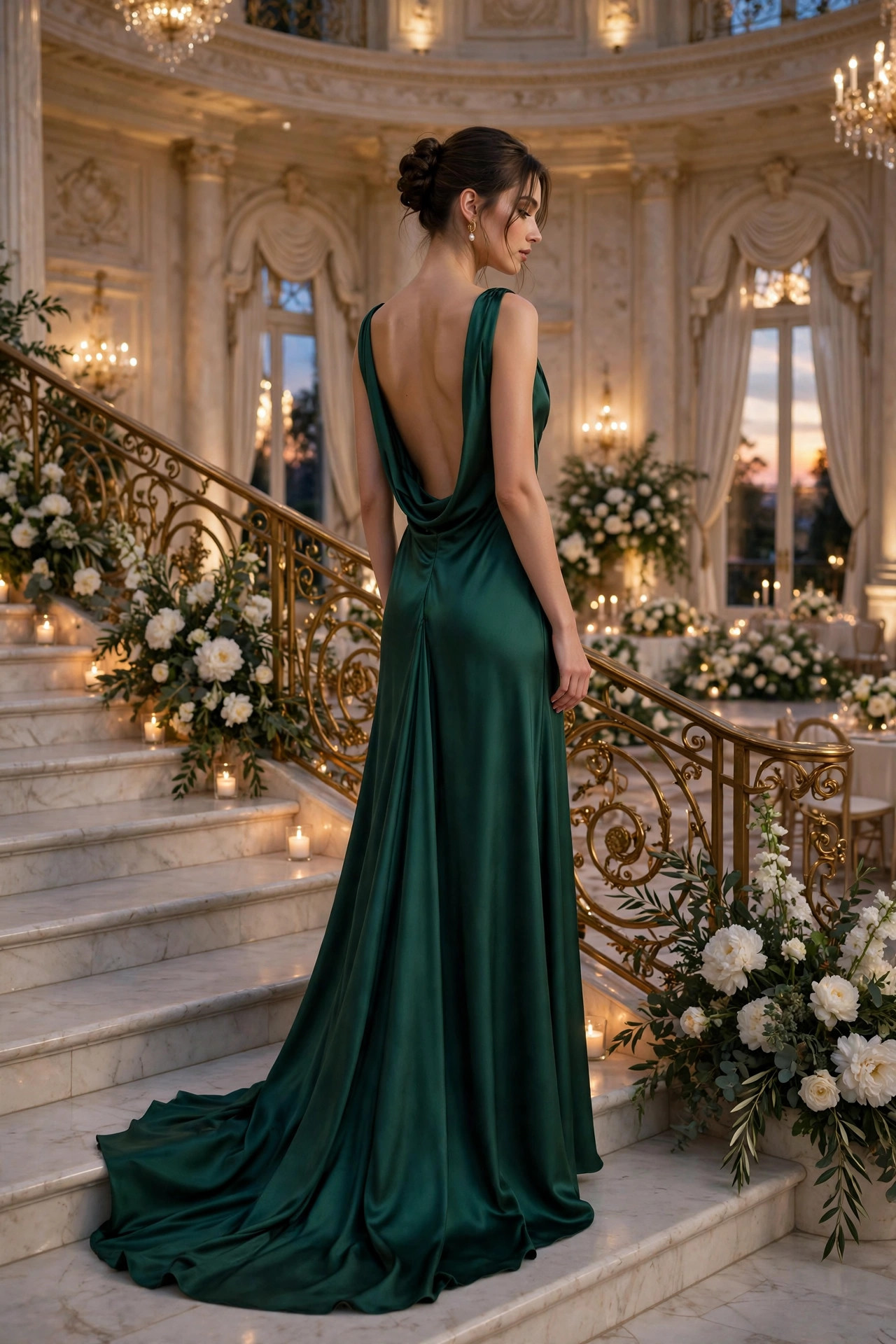
Black tie is the most misunderstood dress code on a wedding invitation — and the easiest to get wrong. It does not mean “wear something nice.” It means formal evening wear: a floor-length gown or a seriously dressed-up formal midi, luxe fabrics, polished hair and makeup, and heels that can survive a dance floor. The good news? Once you know the actual rules, shopping for black tie wedding guest dresses becomes fun instead of stressful. This guide walks you through the silhouettes, fabrics, colors, and styling details that work — gowns versus formal midi, satin versus velvet versus crepe, what to wear in every season, and the color mistakes guests keep making. Every look below follows real dress-code rules, so you can RSVP “yes” with total confidence.
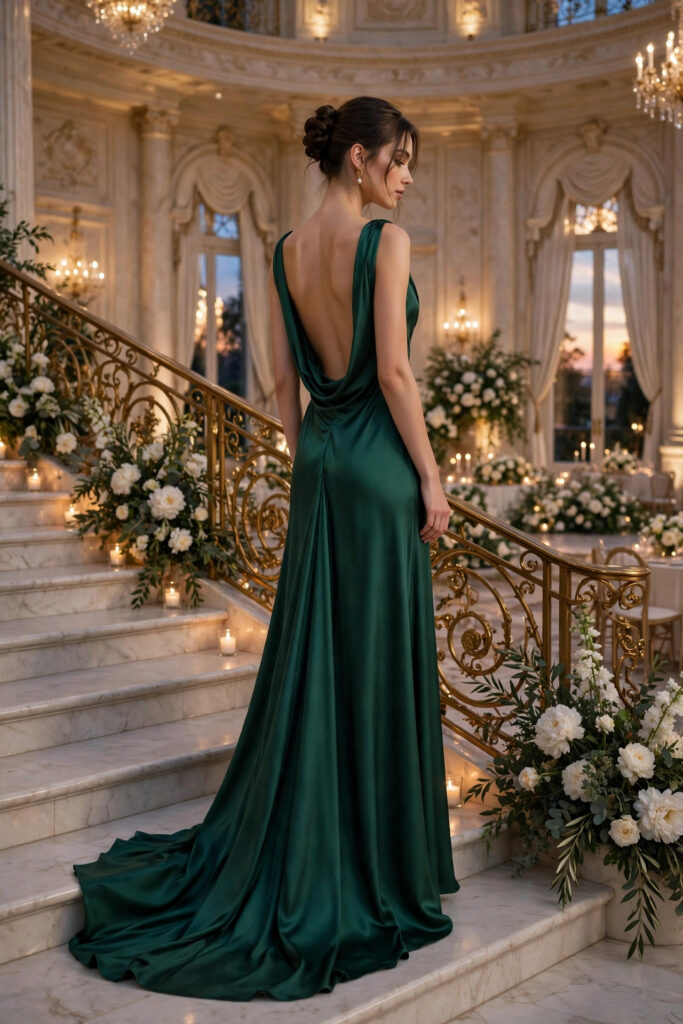
1. The Emerald Satin Gown
Satin is the undisputed queen of black tie fabrics, and emerald is its crown jewel. A floor-length satin gown with a draped cowl neckline catches candlelight and camera flashes exactly the way formal evening wear should — with a soft, liquid sheen rather than a loud shine. The cowl neckline is one of the most forgiving details in evening wear: it skims the bust, adds drape interest at the chest, and needs no necklace, which keeps your styling simple. Because satin shows everything, invest in seamless undergarments — a smoothing slip or high-waisted brief in your skin tone — and have the hem finished to kiss the top of a 3-inch heel. Keep accessories minimal: a small metallic clutch, delicate drop earrings, and hair swept up to show off the low open back. One caution: satin wrinkles on the drive over, so hang the gown in the bathroom while you shower and let the steam release the creases.
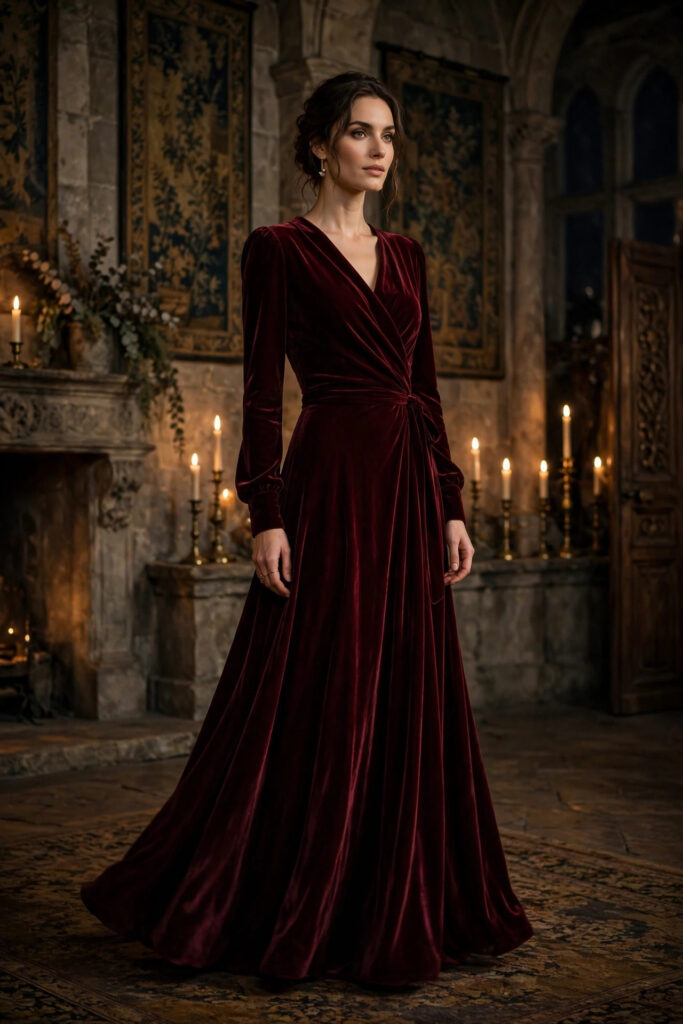
2. The Burgundy Velvet Wrap Gown
Velvet is black tie’s winter answer to satin — rich, weighty, and unmistakably formal. A burgundy velvet wrap gown with long sleeves checks every box for a cold-weather formal wedding: full coverage, a defined waist from the wrap construction, and a floor-skimming skirt that moves beautifully. The wrap silhouette is genuinely useful, not just pretty — it adjusts to your waist, accommodates a bigger dinner, and creates a V-neckline that elongates the neck. Style velvet with warm metals: antique gold earrings and a gold clutch pick up the fabric’s depth, while silver can look cold against it. Velvet crushes if you sit for hours, so choose a gown with a little stretch and stand to smooth the seat before photos. Skip the necklace here too — the wrap neckline is the detail. Finish with a low chignon, because velvet plus loose hair plus a winter coat equals static chaos.
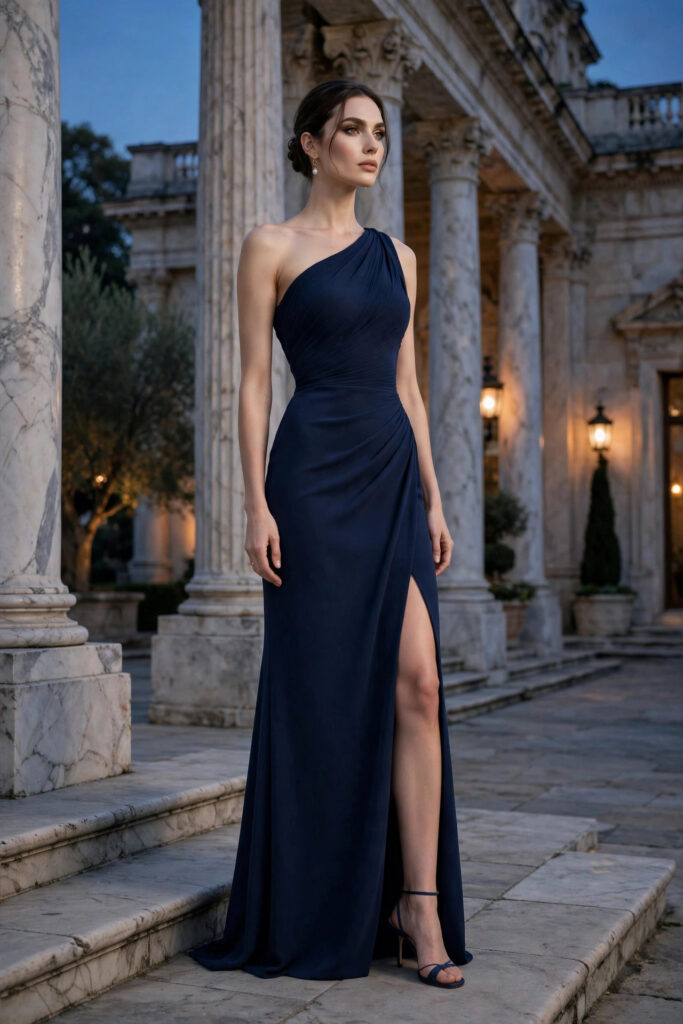
3. The Navy One-Shoulder Crepe Gown
Crepe is the workhorse of formal dressing: structured, matte, endlessly flattering, and it never wrinkles in the car. A one-shoulder navy crepe column gown with a thigh-high slit is modern black tie at its best — architectural, confident, and appropriate from the ceremony through the last dance. Navy deserves more credit as a formal color: it reads as evening-appropriate as black but photographs with more dimension, and it flatters every skin tone. The one-shoulder line does the accessorizing for you, so balance it by sweeping your hair to the opposite side or into an updo — hair falling over the bare shoulder hides the gown’s best feature. Wear a statement earring on the bare-shoulder side and nothing on the other; skip the necklace entirely. The slit is the fun part, but keep it walkable: you should be able to climb venue stairs without adjusting the dress.
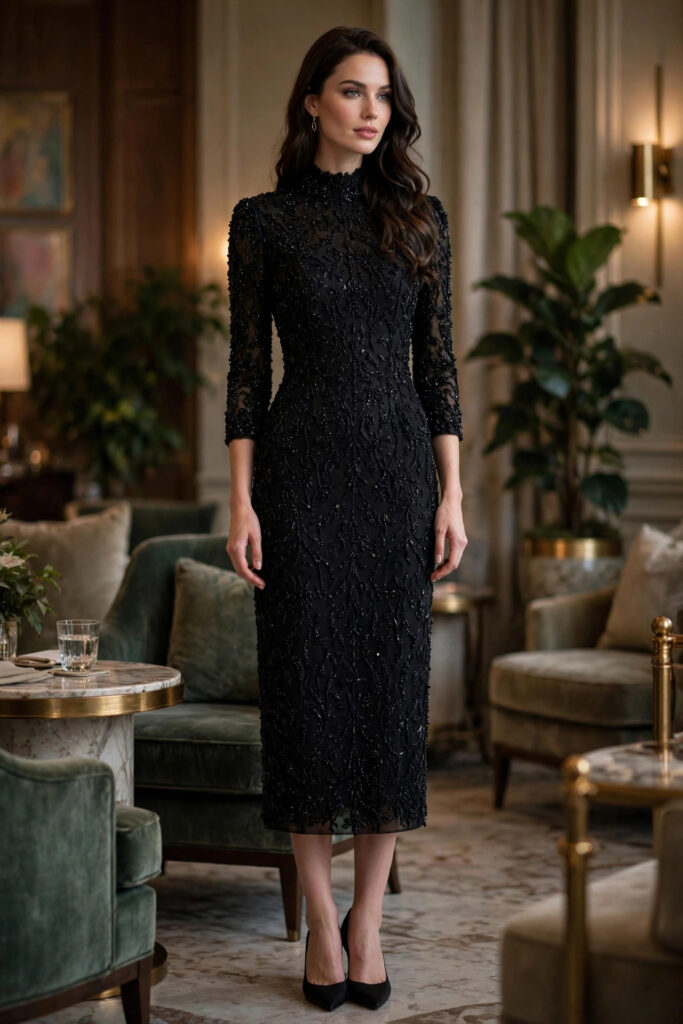
4. The Black Beaded Midi Dress
Yes, a midi can work at black tie — but only if it is unmistakably formal. A black midi fully covered in bead embellishment with three-quarter sleeves reads as evening wear because the beading does the heavy lifting that length usually does. The rules for pulling this off: the hem should hit at or just below mid-calf (never above the knee), the fabric or embellishment must look expensive up close, and the styling must be full-formal — heels, clutch, polished hair, real jewelry. This is the silhouette to choose when you will be dancing all night or navigating a venue with lots of stairs, since a midi is far easier to move in than a train. Keep the rest of the look quiet so the beading stays the star: black strappy sandals, a black minaudière, and one cocktail ring. Avoid matte jersey midis or anything that could pass as office wear — at black tie, a midi must earn its place.
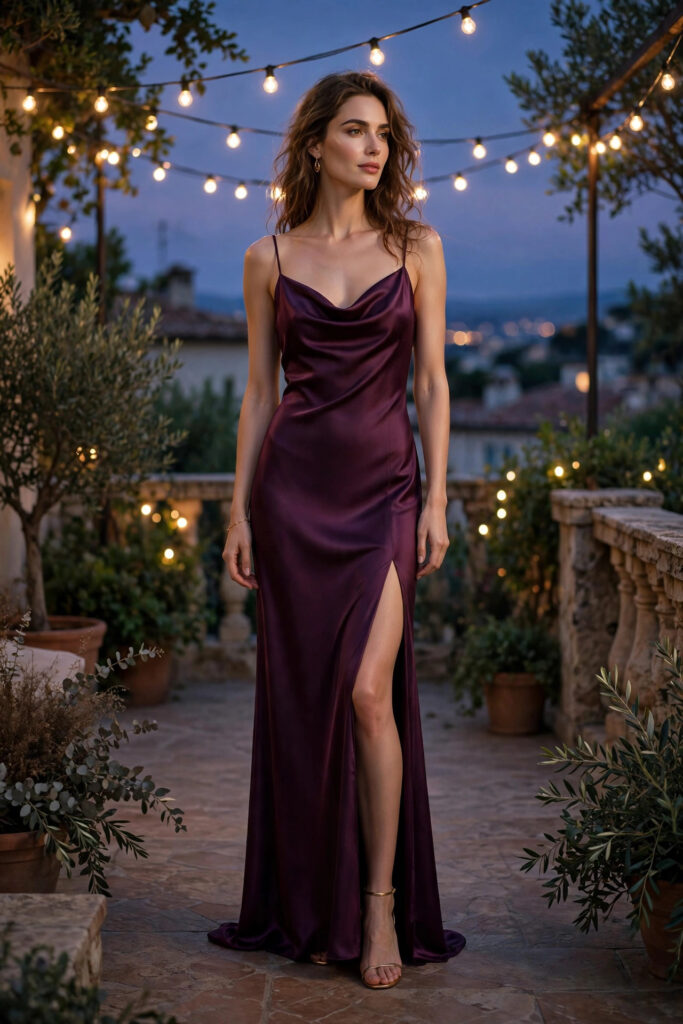
5. The Plum Satin Slip Gown
The slip dress grew up, and the floor-length satin slip gown is now a legitimate black tie choice. In deep plum with a cowl front and thigh-high slit, it is sensual without trying too hard — the key is that the length and the fabric formality do the work. A slip gown needs impeccable fit: the straps should be adjusted so the cowl drapes (not gapes), and the bias cut should skim rather than cling. Because the silhouette is simple, your styling carries the formality — this is where you wear the good earrings, a sleek updo, and a heel with some presence. Bring a wrap or pashmina for the ceremony-to-reception transition; bare shoulders get cold in air-conditioned ballrooms, and a wrap also adds modesty for religious ceremonies. One hard rule: the slip must be floor-length. A knee-length slip is cocktail attire, not black tie, no matter how pretty the fabric.
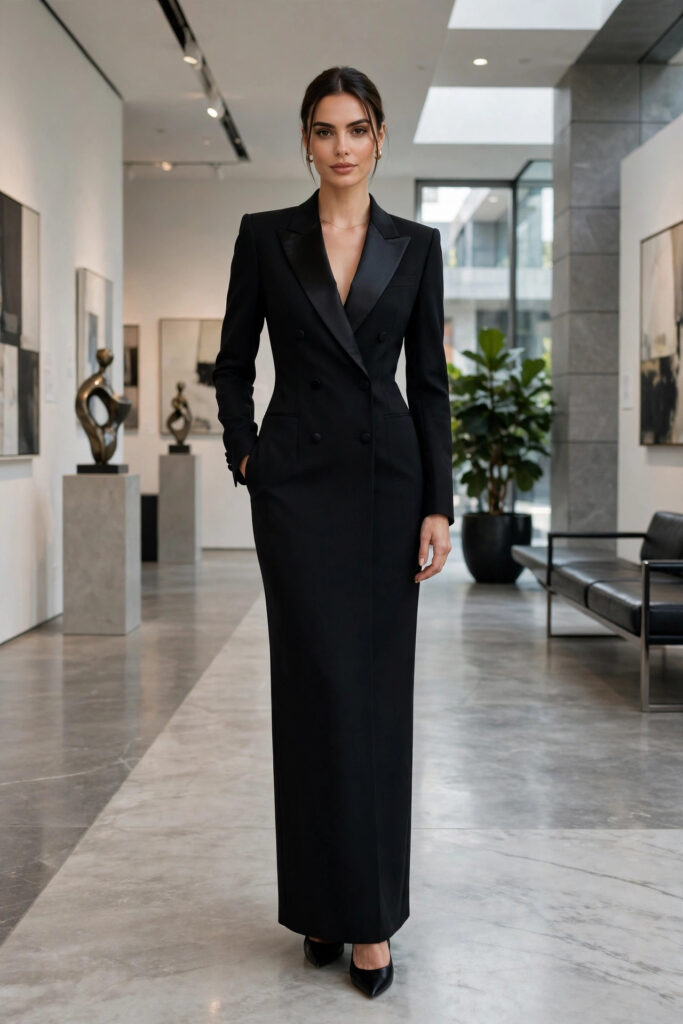
6. The Black Tuxedo Dress
Menswear-inspired formal wear is fully accepted at black tie weddings, and a black tuxedo-style dress — sharp shoulders, satin lapels, slim floor-length skirt — is one of the chicest things in the room. The tailoring is everything: the shoulders must sit exactly on your shoulder line, the lapels should lie flat, and the waist needs definition so the look reads as a dress, not a borrowed suit. Soften the severity with feminine styling — a red lip, a delicate bracelet stack, pointed-toe pumps rather than loafers — so the outfit feels like evening, not the office. This is also the best black tie option if you run cold: the structured bodice layers beautifully under a tailored coat, and you can add sheer black tights without anyone noticing. Keep jewelry minimal and architectural — a single cuff or geometric earrings — to echo the tailoring.
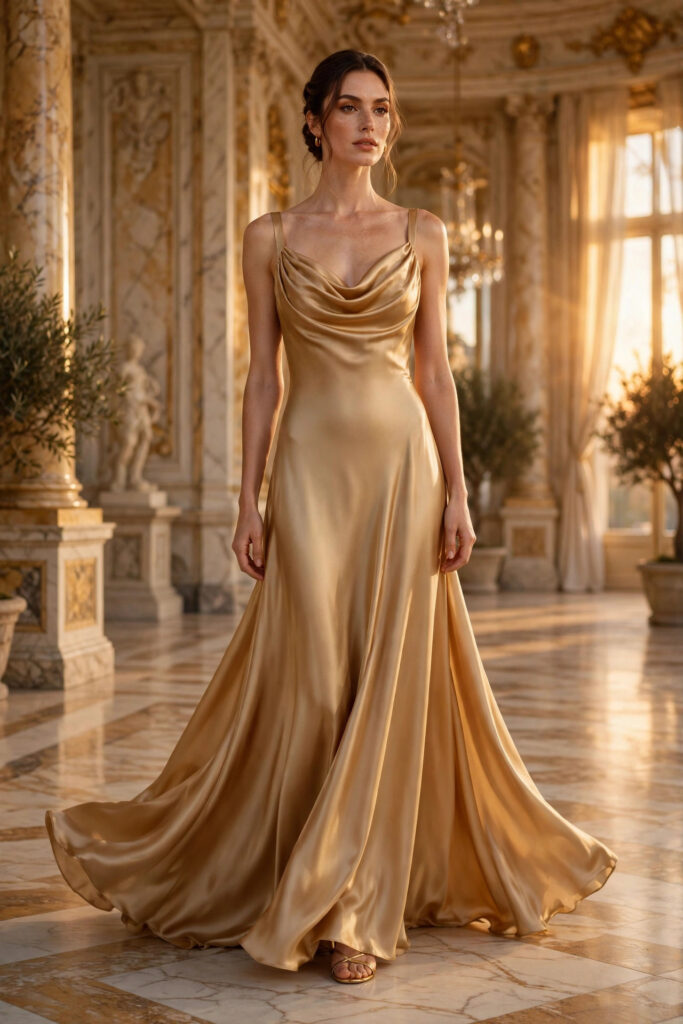
7. The Champagne Gold Slip Gown
Champagne and gold are black tie classics, but they come with one critical rule: the tone must read unmistakably as gold, never as white-adjacent. A rich champagne-gold satin slip gown with a draped neckline threads that needle perfectly — warm, luminous, and clearly not bridal. When shopping, check the fabric in daylight: if it could be mistaken for ivory in a photo, put it back. Warm metallics love warm styling — gold jewelry, bronze eyeshadow, a nude or gold heel — and they glow against deeper skin tones in particular. Because a slip silhouette is minimal, fit is again the whole game: side seams should fall straight, and the hem should just graze the floor in your event heels. This color family is especially strong for vineyard, ballroom, and New Year’s Eve weddings, where candlelight makes metallics look expensive. Pair it with an elegant updo so nothing competes with the fabric’s sheen.
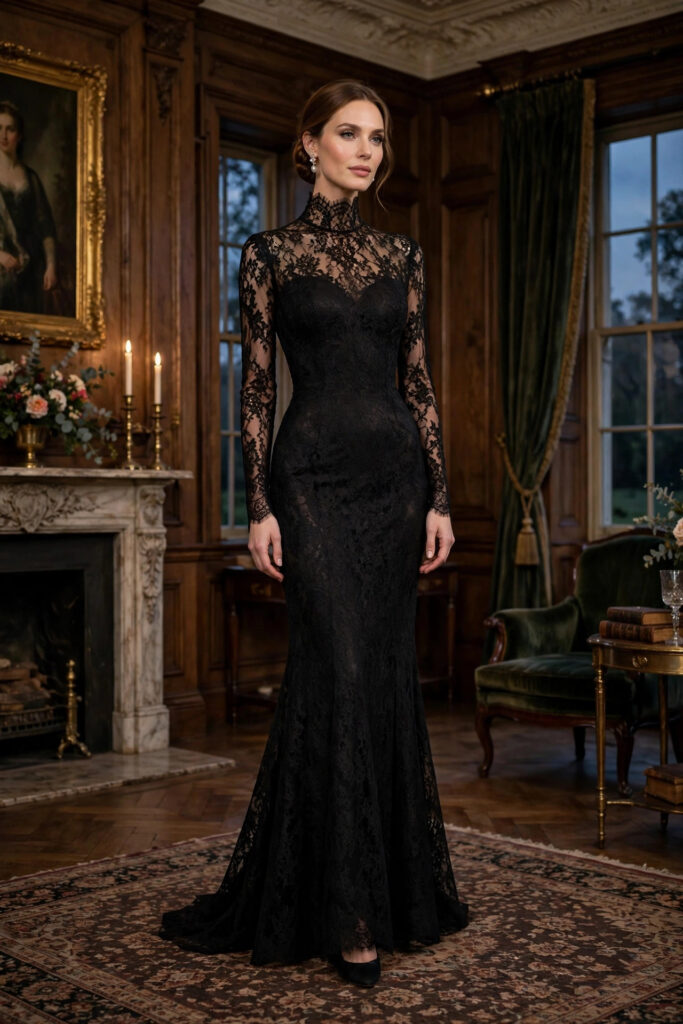
8. The Long-Sleeve Black Lace Gown
Long sleeves and lace are a black tie power combination — modest, romantic, and formal without a single doubt. A black lace gown with long sleeves and an illusion high neckline works for the widest range of weddings, including religious ceremonies where coverage matters. The detail that makes or breaks lace is the lining: a nude lining under black lace can look unintentionally sheer in flash photography, so choose black-on-black lining or test the dress with your phone flash before the event. Illusion necklines are your friend here — they give the elegance of a high neck with the lightness of a lower one. Because lace is visually busy, keep everything else calm: simple stud or small drop earrings, a sleek low bun, and a black satin clutch. This is the gown to reach for when the invitation says black tie and the venue is a cathedral, a historic manor, or anywhere traditional.
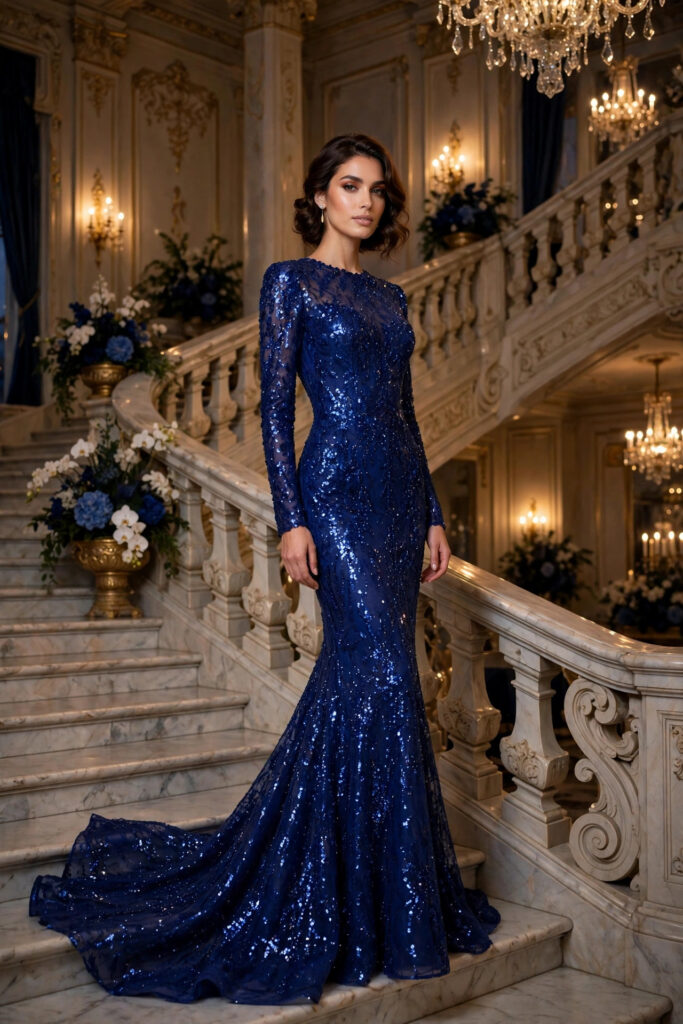
9. The Sapphire Sequin Gown
Sequins are not just allowed at black tie — at an evening wedding, they are expected in moderation. A royal sapphire sequin gown with long sleeves and a fitted mermaid silhouette is full glamour, and the deep blue keeps it sophisticated rather than costume-y. The styling rule for sequins is one statement at a time: the dress is the statement, so hair, makeup, and accessories go understated — a smooth blowout or simple updo, neutral makeup with one focus (eyes or lips, not both), and minimal jewelry. Sequin gowns photograph brilliantly but can be heavy and warm, so check that you can sit comfortably and consider the venue temperature. Long sleeves balance a fitted silhouette beautifully and add formality. Save sequins strictly for evening — they are the one fabric family that never works for a daytime dress code, even a formal one.
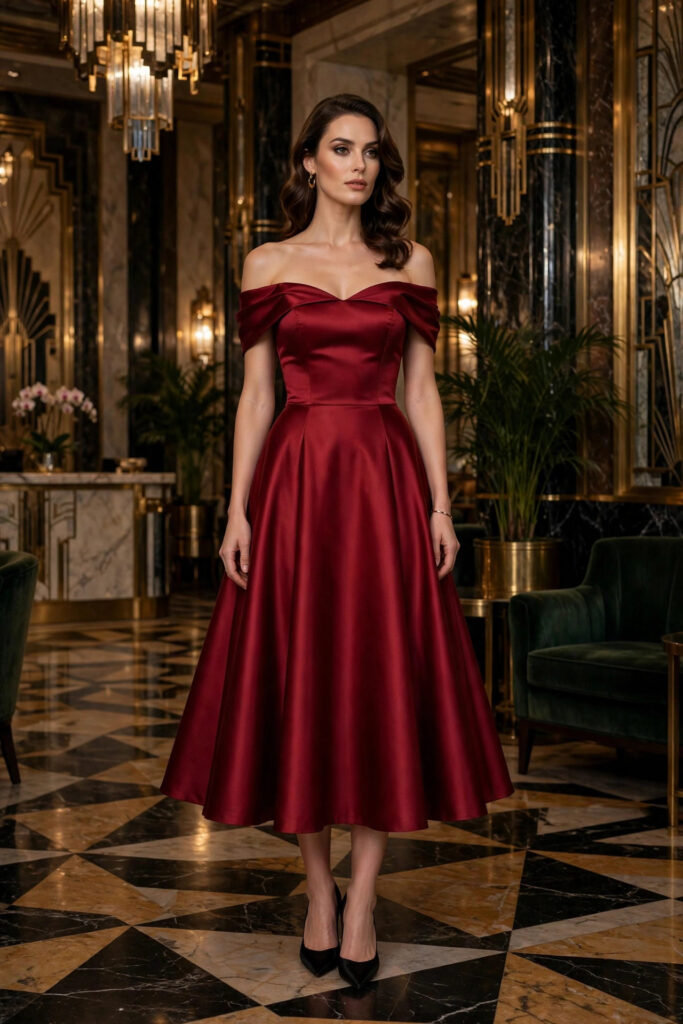
10. The Red Off-Shoulder Satin Midi
Red at a wedding is completely fine — the “don’t wear red” rule is a myth unless the couple has specifically asked guests to avoid it. A deep red off-shoulder satin midi with a fitted bodice is bold, festive, and formal enough for black tie when the fabric is luxe and the hem hits mid-calf. The off-shoulder neckline needs structural support: look for interior boning or a wide elastic band so you are not tugging the neckline up all night. Because red is a high-impact color, keep the silhouette clean and the accessories neutral — black or nude heels, a black clutch, gold or no jewelry beyond earrings. This look shines at holiday-season and Valentine’s-adjacent weddings. One etiquette note: if the wedding has a cultural tradition where red is reserved for the couple or family (as in some South Asian and East Asian ceremonies), choose another color — when in doubt, ask someone in the wedding party.
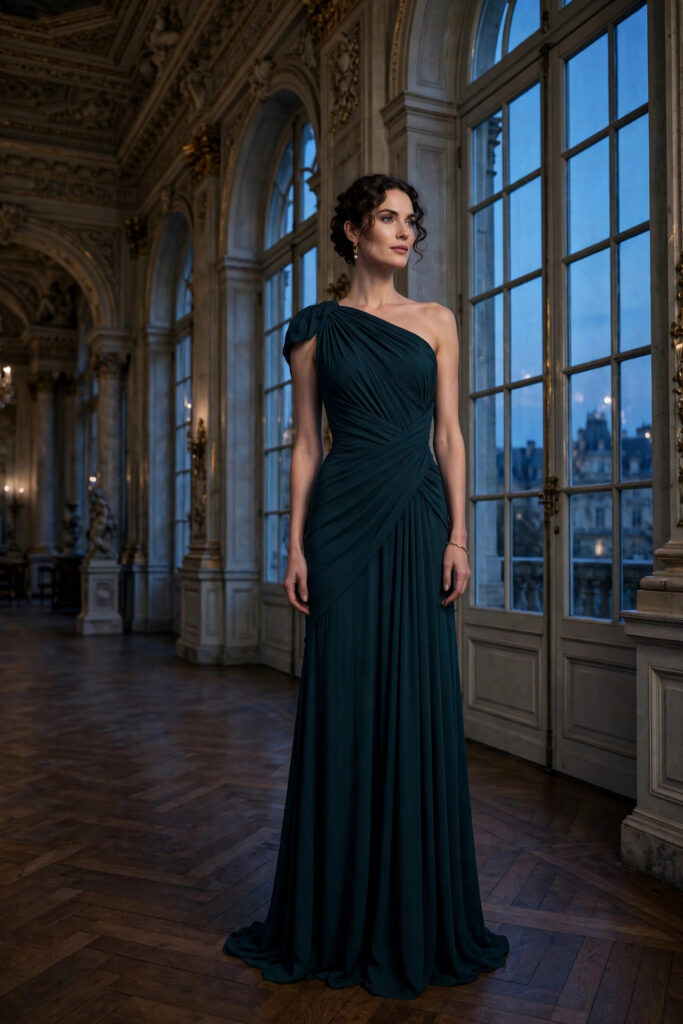
11. The Dark Teal Draped Crepe Gown
Jewel tones are the safest bold choice in formal wear, and dark teal is one of the most universally flattering. A teal crepe gown with a draped asymmetric bodice gives you the structure of crepe with softness at the neckline — draping also happens to be incredibly forgiving across the midsection. Teal sits beautifully between blue and green, so it suits both silver and gold jewelry; silver and platinum tones feel crisper and more modern against it. This is an excellent pick for blue-hour outdoor ceremonies and waterfront venues, where the color echoes the surroundings in photos. Style it with an elegant twist or chignon to show off the asymmetric neckline, and choose a heel in black patent or metallic silver. If you are between sizes, size for the draped bodice and have the skirt taken in — drape needs to fall from the right points to look intentional.
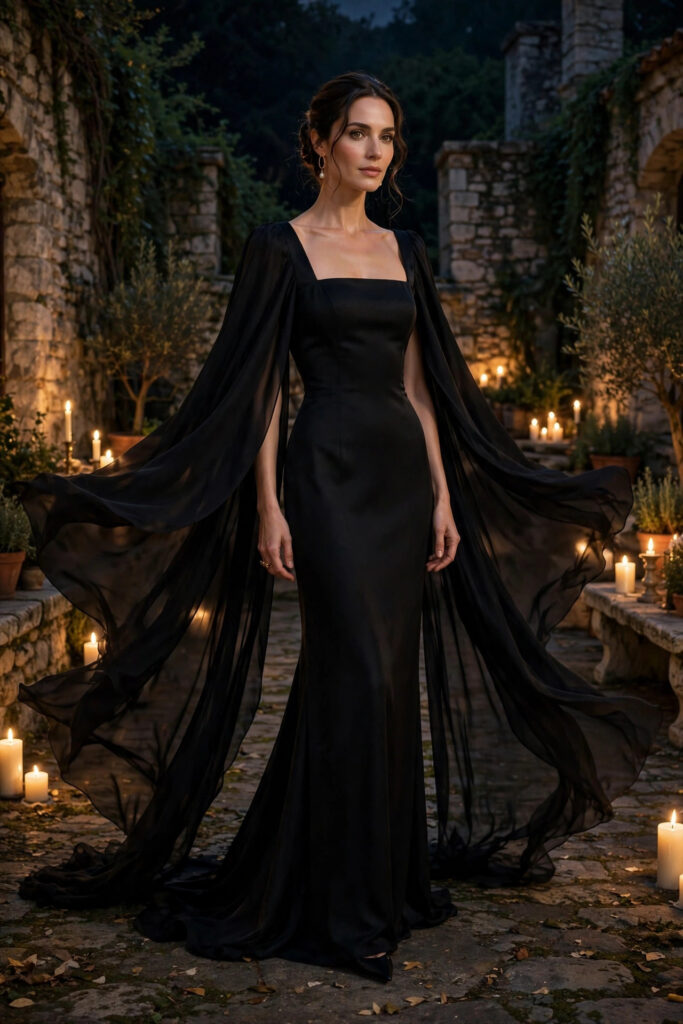
12. The Black Cape-Sleeve Column Gown
When you want drama without sequins, a black column gown with flowing cape sleeves delivers. The column silhouette elongates every figure — it is the most leg-lengthening shape in evening wear — while the cape adds movement and red-carpet energy. Practical notes: capes catch wind, so this is a look for indoor venues or calm evenings; check that the cape attaches securely and does not slide when you raise your arms for photos. Because the cape is the detail, keep the neckline simple — a square or bateau neckline works perfectly — and skip necklaces. A column gown demands precise hemming: it should break just at the top of your heel with no pooling, since excess fabric at the ankle shortens the leg line you are paying for. Finish with architectural earrings and a structured black clutch. This is the gown for making an entrance.
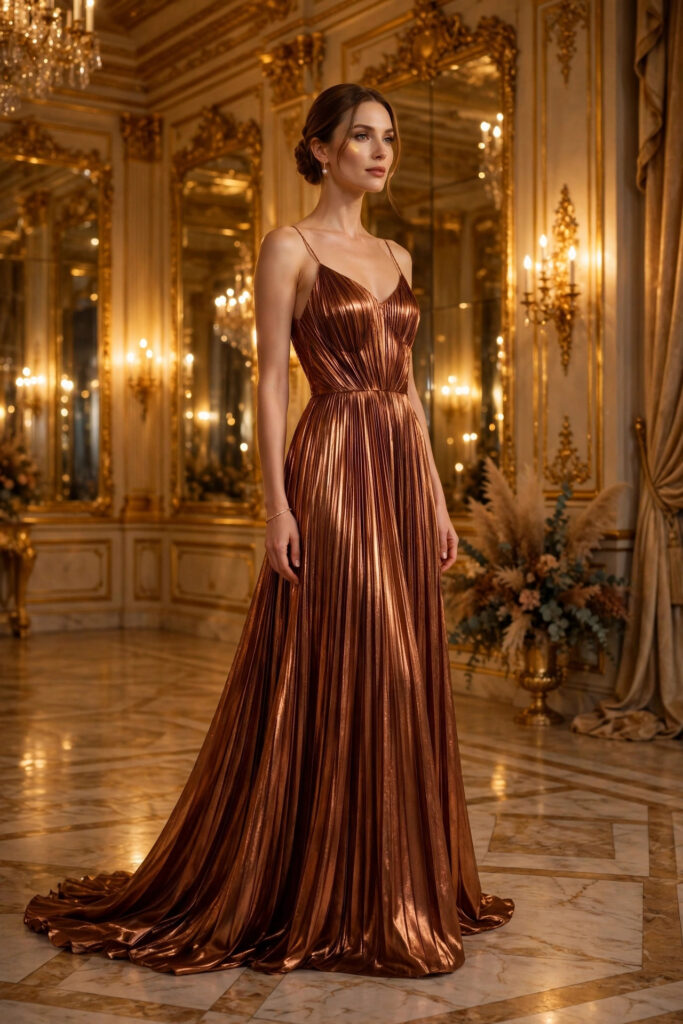
13. The Copper Bronze Pleated Gown
Warm metallics are having a major moment in formal wear, and a copper-bronze pleated gown is festive without being flashy. Pleats are a brilliant formal detail — they add movement, catch light as you walk, and the vertical lines are flattering on every body. Metallic etiquette at black tie: warm metallics (copper, bronze, gold) suit autumn and winter weddings especially well, while cooler metallics (silver, pewter) skew spring. Keep the metallic as the single shine in your outfit — pair it with matte accessories in black or deep brown, not more metallic, to avoid a head-to-toe foil effect. Pleated skirts need room to move, so sit-test the dress and make sure the pleats fall back into place when you stand. A thin-strapped pleated gown pairs beautifully with a faux-fur or velvet stole for winter ceremonies. Nude-for-you heels keep the leg line long under a metallic skirt.
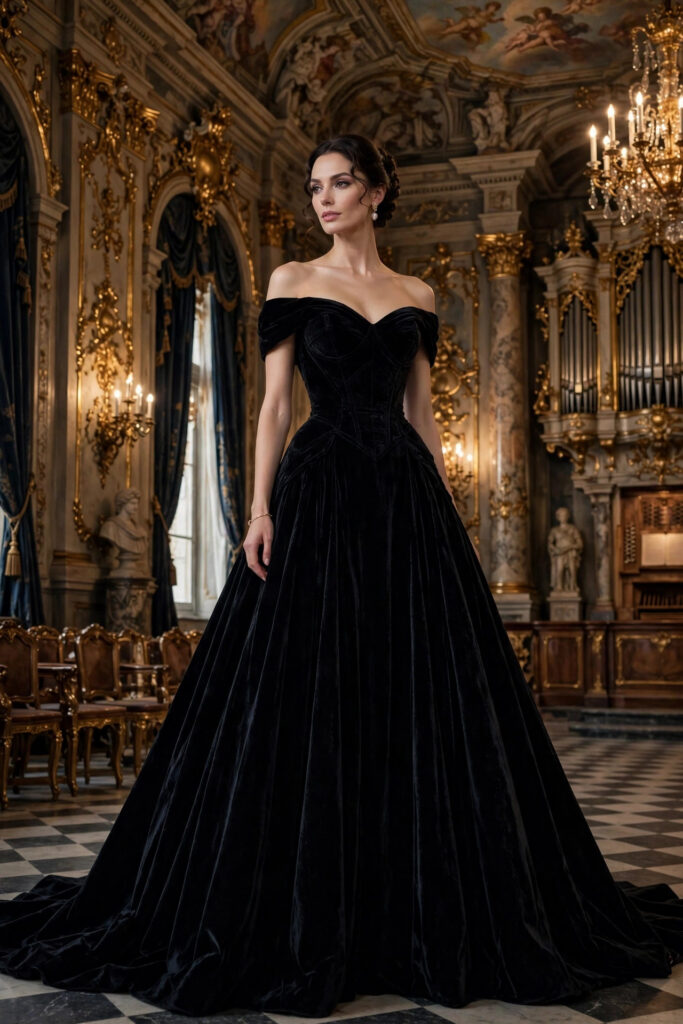
14. The Midnight Velvet Off-Shoulder Gown
For a winter black tie wedding, midnight-black velvet with an off-shoulder neckline is about as formal as it gets. The combination works because the fabric brings the richness while the neckline brings the romance — structure plus softness in one dress. Off-shoulder gowns live or die by their underpinnings: a well-fitted strapless bra or sewn-in cups are non-negotiable, and a fitting where you raise your arms, sit, and hug someone will reveal any issues before the wedding day. Velvet’s weight means the bodice stays put better than lighter fabrics, which is a genuine advantage. Style with diamond or crystal-look earrings — they pop against black velvet like stars — and carry a wrap for the journey between venues. This gown also photographs beautifully in low light, which matters when the reception runs late into a winter night.
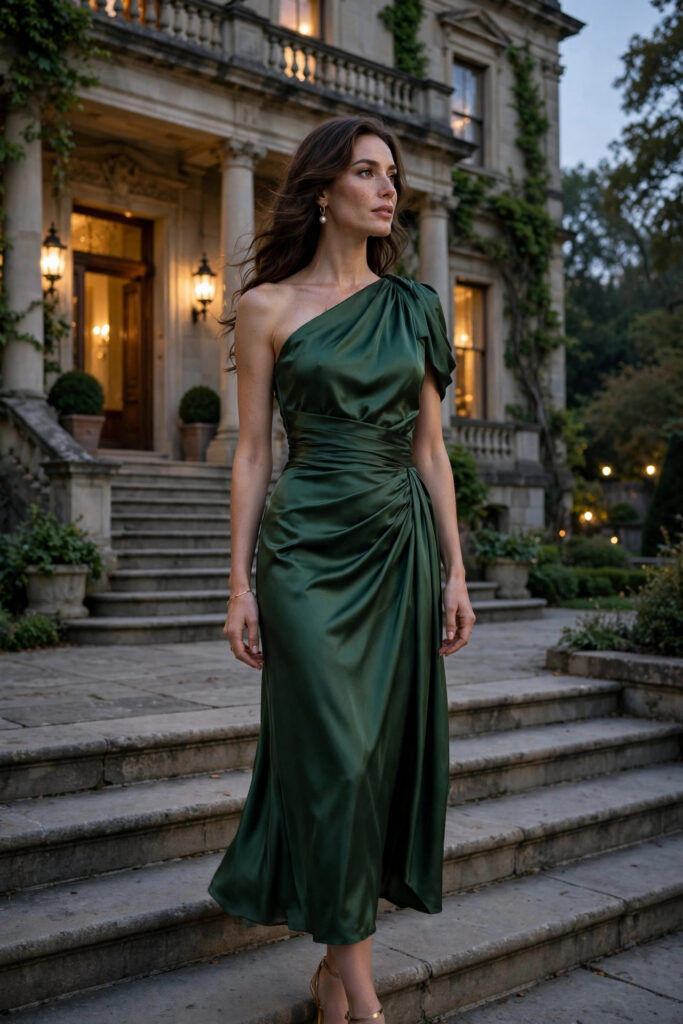
15. The Forest Green One-Shoulder Satin Midi
A formal midi earns its black tie credentials through fabric, finish, and styling — and a forest green one-shoulder satin midi with a ruched waist proves the point. Satin’s sheen, the sculptural one-shoulder line, and a hem that falls well below the knee all signal evening formality. To keep a midi firmly in black tie territory, style it without mercy: heeled sandals (never flats), a dressy clutch, statement earrings, and an evening hairstyle. Forest green is a superb holiday-season choice and flatters warm and cool skin tones alike — it is festive without screaming Christmas. The ruched waist is doing quiet work here, defining the waistline and forgiving the dessert table. For more cold-weather formal inspiration, see our winter wedding guest outfits guide. One last check: spin in front of a mirror — a formal midi should move like evening wear, not cling like daywear.
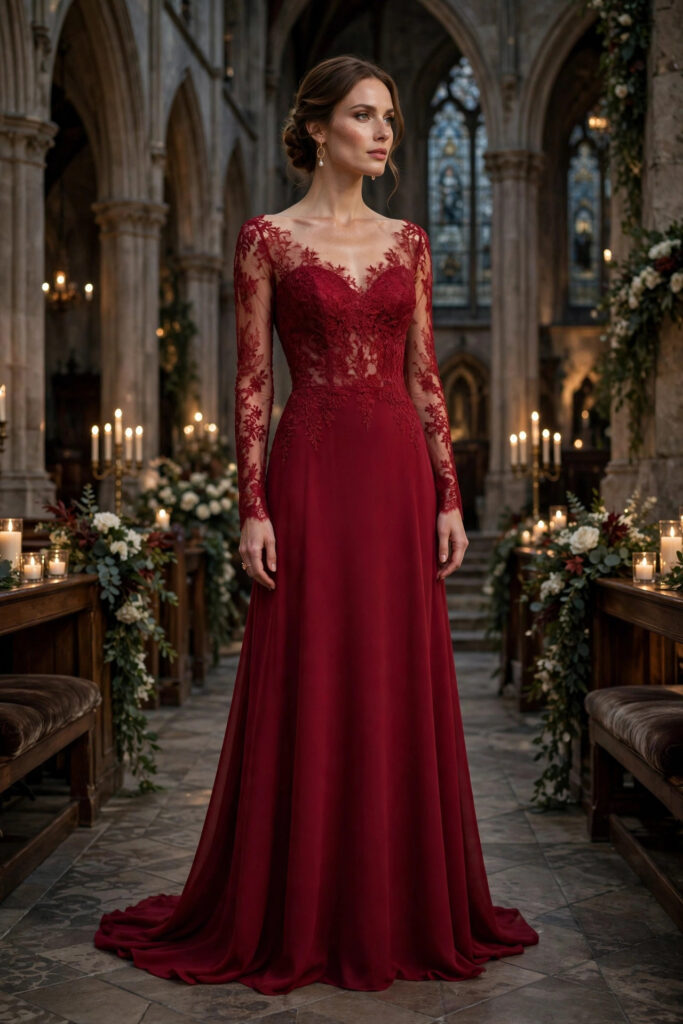
16. The Wine-Red Lace-Sleeve Gown (Plus the Real Rules)
We end with the gown that follows every rule at once: wine-red crepe with long lace sleeves and a lace overlay bodice — full length, full coverage where it counts, rich color, luxe texture. Long lace sleeves are the elegant answer to arm-consciousness at formal events, and wine is red’s sophisticated older sister: festive, photogenic, and appropriate for every season. Let this final look lock in the real black tie rules. Length: floor-length gown, or a formal midi at/below mid-calf — never cocktail-short. Fabric: satin, velvet, crepe, lace, sequins, silk — never jersey, linen, or anything matte-casual. Colors to avoid: white, ivory, cream, and anything that photographs as bridal; also skip anything too close to the wedding party’s known colors if you know them. For non-wedding occasions where white is welcome, our white dress outfit ideas have you covered. Fit details: hem for your actual event heels, test under flash photography, and sit-test everything. The invitation: “black tie” means tuxedos and gowns; “black tie optional” lets you do a very formal midi or dark suit equivalent; “creative black tie” invites personality but not casualness. And when a bold color like red is your choice, our red dress outfit guide has more styling ideas. Follow these, and you will never be the guest who got it wrong.
Leave a Reply