
There’s a special kind of misery in standing over your closet on a freezing morning, piling on sweater after sweater until you look — and feel — like a bundled-up marshmallow. Winter layering outfits shouldn’t be a choice between freezing and frumpy. Done right, layers are the most stylish tool in your cold-weather arsenal: they add depth, texture, and visual interest that a single heavy coat never could.
The secret isn’t more clothes — it’s smarter clothes. This guide breaks winter layering down into 16 repeatable formulas: the 3-layer system that actually works, office polish that survives the commute, weekend coziness that still looks intentional, and the no-bulk tricks stylists swear by. Bookmark this one — you’ll use it every cold morning until spring.
1. The 3-2-1 Layering Formula
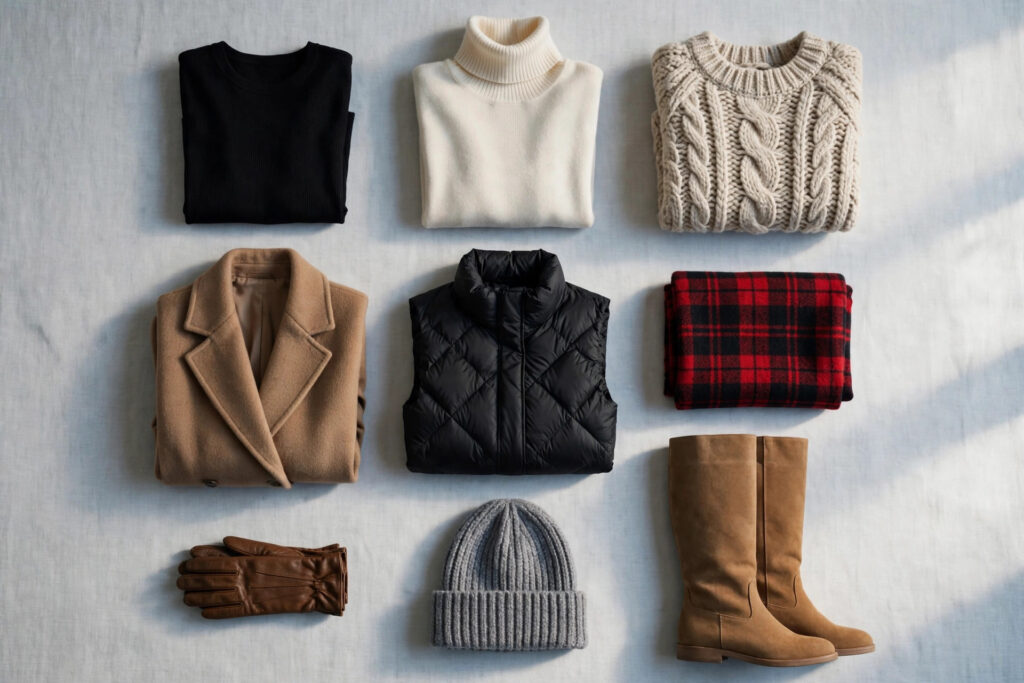
Every great winter layering outfit follows the same math: three thin layers beat one thick one, two of them fitted, one of them statement. Start with a fitted base (thermal or thin turtleneck), add a mid-layer with structure (knit, shirt, vest), and finish with one outer layer that carries the look (coat, puffer, blazer).
Build it like this: black thermal + cream fisherman knit + camel wool coat. Or: white turtleneck + plaid flannel shirt + long black puffer. Each layer should be visible at exactly one edge — a collar here, a cuff there.
Tip: If you can’t move your arms comfortably, shed the mid-layer and upgrade the base instead.
2. Thermal Base Layers That Don’t Look Like Long Johns
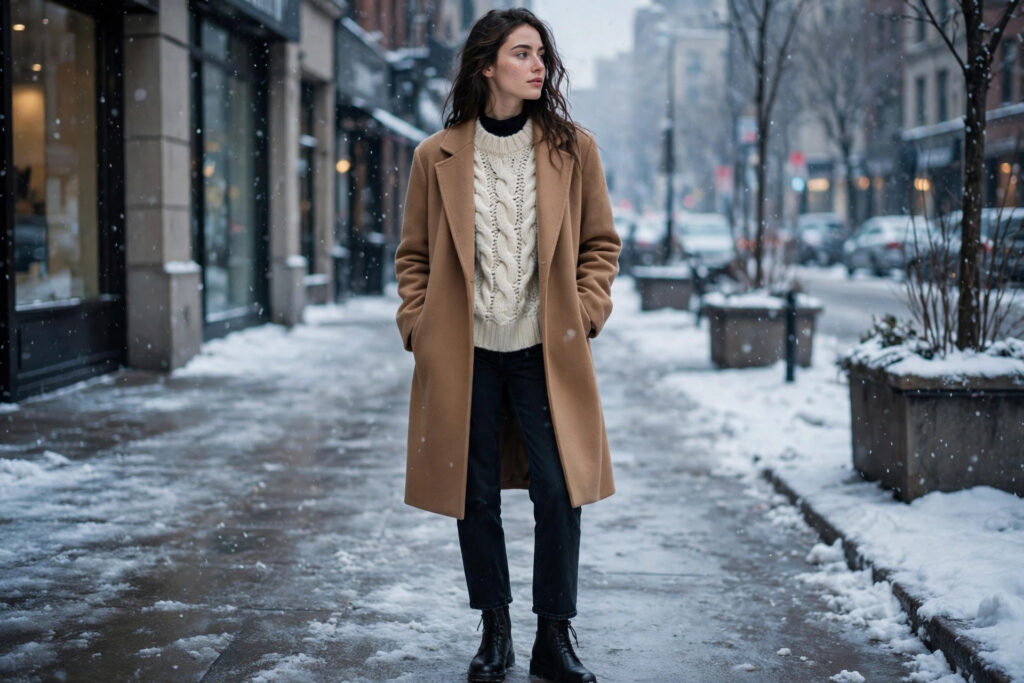
The single biggest upgrade to your winter layering outfits costs less than a lunch out: a proper thermal base layer. Modern thermals are silky, paper-thin, and disappear under everything while adding the warmth of a whole extra sweater. Silk-blend and merino thermals are the gold standard.
Tip: Size down in thermals — they work by sitting close to the skin.

3. The Turtleneck Under Everything
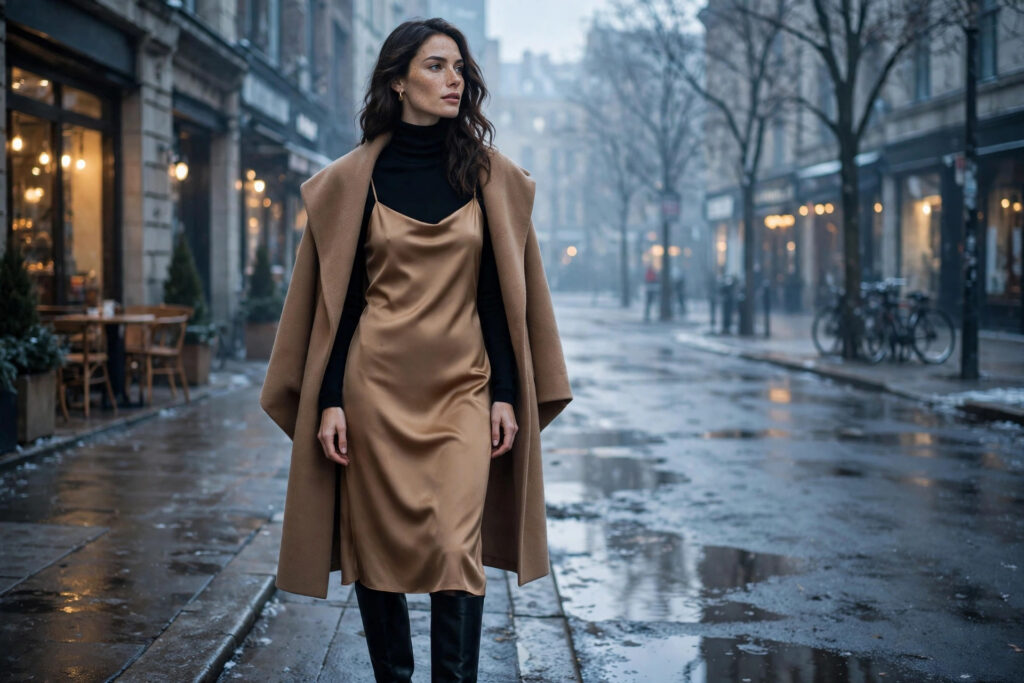
A thin, fitted turtleneck is the hardest-working layer in existence: it slides under slip dresses, blazers, sleeveless knits, and jumpsuits, instantly winterizing pieces you’d otherwise shelve until April. The turtleneck should be thin, fitted but not tight — black, white, cream, grey, or burgundy.
Tip: A striped turtleneck peeking from a solid sweater adds pattern with zero effort.
4. Puffer Vest + Wool Coat: Double Outerwear
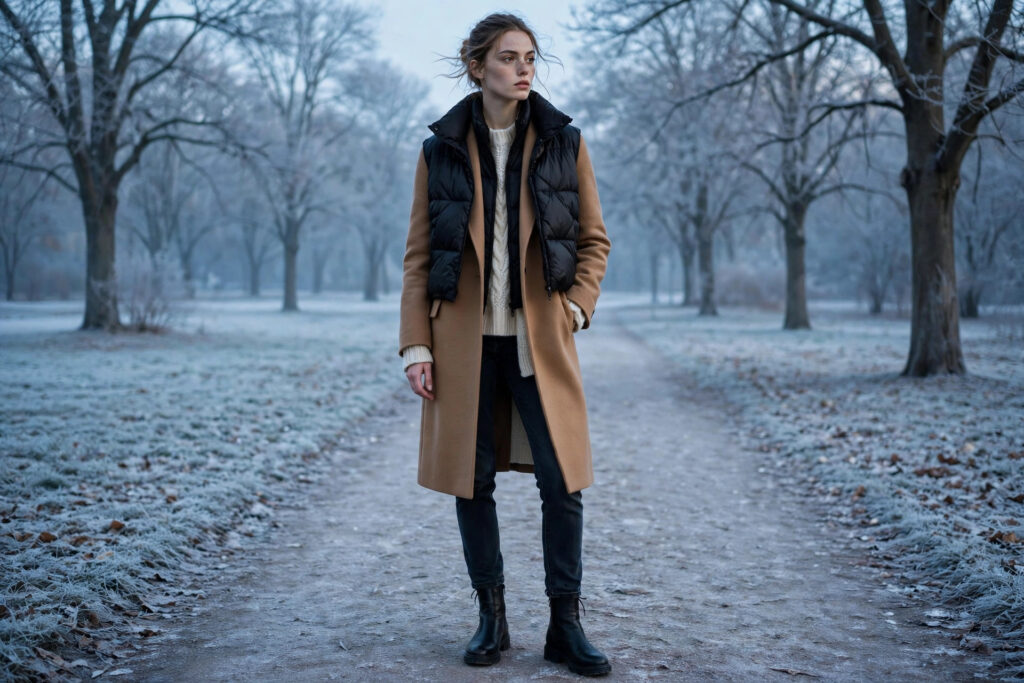
The puffer vest worn over — not under — a wool coat. The vest adds core warmth, the coat keeps the silhouette elegant. Keep the vest cropped or hip-length, and match the tones — black vest over camel coat, navy over grey.
Tip: This also works in reverse on milder days — wool blazer under a long puffer vest.
5. The Oversized Scarf as a Layer (Not an Accessory)
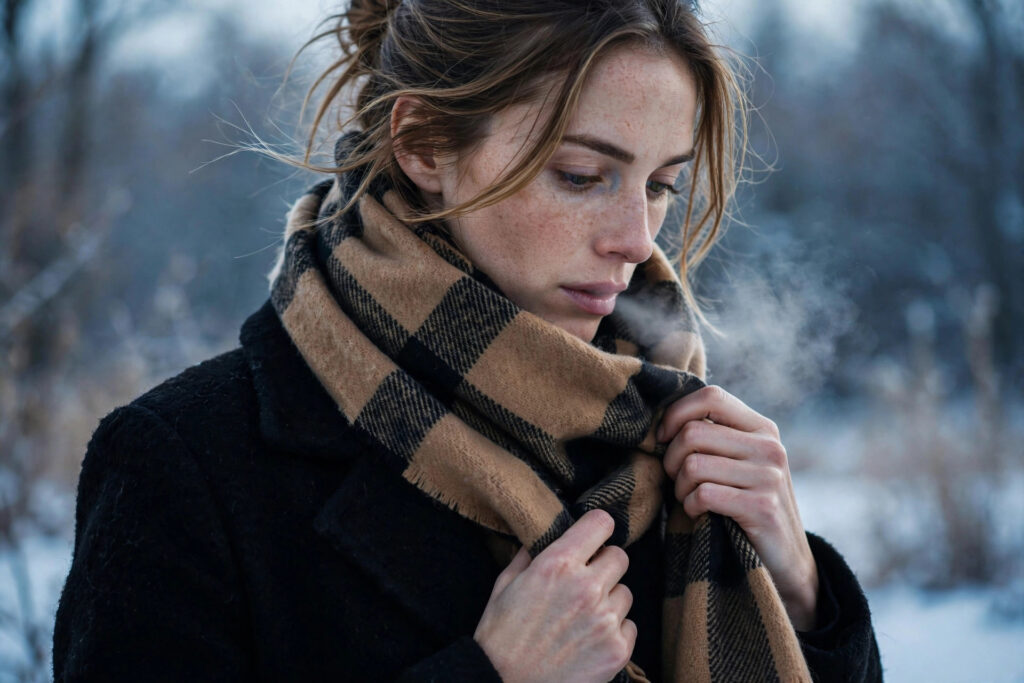
A big wool scarf adds as much warmth as a light jacket. Wrap once loosely, then tuck the ends into the coat rather than letting them dangle — tucked ends look intentional and trap more heat.
Tip: Match your scarf to your hat, not your coat — the head-and-neck zone reads as one unit.
6. Layering Without Bulk: The Thin-on-Thin Rule
Bulk comes from thick-on-thick, not from layers themselves. Every layer except the outermost should be thin enough to pinch between two fingers. Merino, silk, fine cashmere, and technical heat-retaining knits all insulate far beyond their weight.
Tip: If an outfit feels bulky, the culprit is almost always the mid-layer. Swap it for something thinner.

7. The Collar Pop: Shirt Under Sweater
A collared shirt under a crewneck sweater, collar popped and cuffs showing. It takes a plain knit from lazy to polished in ten seconds. White shirt under navy or burgundy is classic; a striped shirt under a solid knit adds quiet pattern.
Tip: An oversized shirt under a fitted sweater creates beautiful drape at the hem.

8. Winterizing Summer Pieces: Slip Dress + Turtleneck + Tights
A slip dress over a fitted turtleneck, with opaque tights and knee-high boots — one of the chicest winter layering outfits in existence. Velvet slip dresses are the winter MVP. Add a belt over the dress if the layers blur your waist.
Tip: A midi slip dress works better than a mini for this formula.

9. The Coat-Over-Blazer: Office Armor
A tailored blazer under a wool overcoat reads powerful — the cold-weather equivalent of a suit. The coat must be roomy enough to close over the blazer without pulling. Let the blazer lapels peek from the coat’s neckline.
Tip: A belted overcoat over an unbelted blazer defines the waist.

10. Weekend Layering: Hoodie Under Puffer
A hoodie under a puffer jacket is warm, effortless, and genuinely cool. Let the hood sit outside the puffer collar, and balance the sporty top with straight-leg jeans or a knit midi skirt with chunky boots.
Tip: A hoodie in cream or camel instead of grey instantly elevates the formula.

11. The Belted-Over-Layers Trick
Cinching a belt over a coat, chunky knit, or even a puffer makes winter layering outfits look intentional rather than shapeless. The belt needs to be substantial: wide leather over a wool coat, a fabric belt over a knit.
Tip: A belt bag worn cross-body over a coat does the same waist-defining job.


12. Texture Mixing: Wool, Cashmere, Down, Leather
The most interesting winter layering outfits mix at least three textures: cashmere knit against wool tailoring, leather boots against matte down. Keep the color palette tight — two or three tones — and let textures do the talking.
Tip: Photograph your outfit in black and white — if it still looks interesting, your texture mix is working.
13. Monochrome Winter Layering
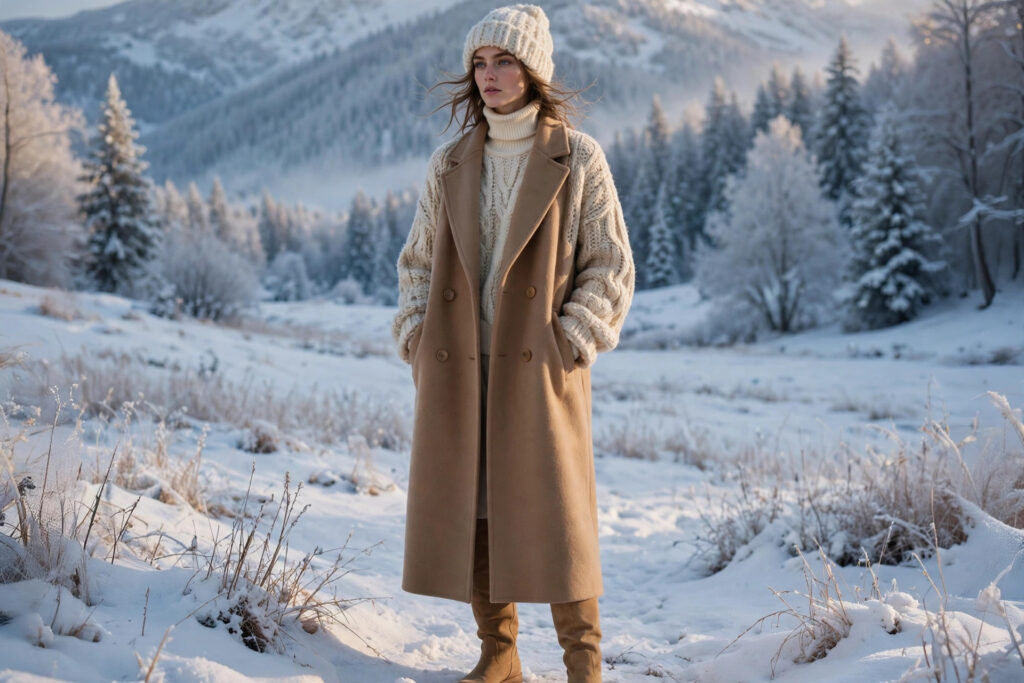
Head-to-toe one color is winter layering’s cheat code: instantly expensive, elongates the silhouette, makes mismatched layers look deliberate. Cream, camel, grey, black — vary shades slightly so it reads tonal.
Tip: Add one contrasting accessory — a burgundy bag, a plaid scarf.

14. The Leg Layer: Tights + Socks + Boots
Opaque tights as base, visible socks as mid-layer, boots as outer. Black opaque tights + ribbed socks in cream or burgundy scrunched above ankle boots, with a skirt showing the sock.
Tip: Socks over tights (not instead) — the double layer at the ankle is where the warmth lives.
15. Evening Layering: Faux Fur and Capes Over Dresses
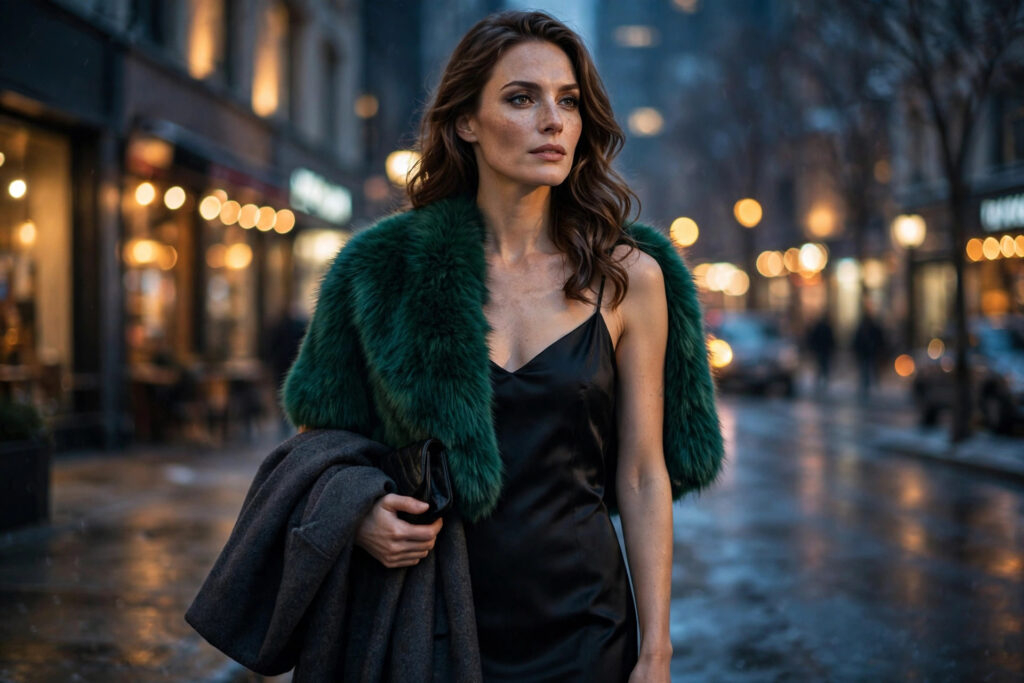
A faux-fur stole or wool cape over an evening look keeps you warm from door to venue without ruining the outfit. A tailored cape over a jumpsuit is dramatic and practical — capes accommodate any sleeve underneath.
Tip: A faux-fur stole packs down to nothing in a tote.

16. The Indoor-Outdoor Transition: Removable Layers
Build in tiers: base + mid-layer that looks complete on its own (your indoor outfit), then outer layers that peel off at the door. Choose outer layers with easy closures — open coats, wrap scarves, slip-on boots.
Tip: Your indoor layer is the outfit people photograph — make it the pretty one.

Frequently Asked Questions About Winter Layering Outfits
How many layers is too many?
Three to four is the sweet spot: base, mid, outer, plus accessories. More than four usually means your layers are too thin — upgrade the base instead.
How do I layer without looking bulky?
Thin-on-thin: every layer except the outermost thin and fitted. Put bulk only on the outside, keep the palette tight, define your waist.
What are the warmest fabrics for layering?
Merino wool and silk for base layers, cashmere and down for insulation, tightly woven wool for wind-blocking outers.
Can I wear dresses in winter?
Absolutely — turtleneck underneath, fleece-lined tights below, knee-high boots, long coat on top. Velvet and wool dresses look seasonally right.
How do I keep my neck warm without a bulky scarf?
A turtleneck base layer, a snood, or a thin silk scarf tucked into your coat.
Final Thoughts: Layer Like You Mean It
Winter layering outfits aren’t about surviving the cold — they’re about dressing better because of it. Start with the base layer upgrade — the cheapest, highest-impact change — then practice one new formula a week. Pin your favorite formulas and stay warm out there.
Leave a Reply